

Aim for 6-second bumpers when the goal is pure awareness, 15 to 30 seconds for most feed and consideration placements, and reserve 60 to 180 seconds for deep-consideration or CTV storytelling. Put your hook in the first 3 seconds regardless of runtime. YouTube's billing rules alone should push most advertisers toward a 15 to 30 second sweet spot rather than anything longer.
TL;DR:
- Short-form ads under 30 seconds generally achieve higher completion rates and better engagement than longer videos, especially in cold prospecting settings.
- On YouTube, a 15 to 20-second skippable ad maximizes view volume and cost efficiency, as charges occur after 30 seconds watched or full view if shorter.
- Facebook and Instagram Reels or Stories perform best with 6 to 15-second content, while LinkedIn short clips should aim for 15 to 30 seconds to match platform recommendations.
- Testing multiple lengths from a single master asset is more cost-effective and faster, with variations often produced in 24 to 48 hours.
- Producing a variety of validated video lengths supports better campaign performance, avoiding audience fatigue and optimizing budget use across platforms.
Table of Contents
- What Is the Ideal Video Ad Length by Platform?
- Why Does Video Ad Length Affect Performance So Much?
- Platform-by-Platform Length Guidance
- How Should You Test Different Video Ad Lengths?
- How Do You Produce Multiple Length Cuts Without Losing Quality?
- What Do Completion Rate Benchmarks Actually Show?
- How Does Length Affect Engagement and Retention?
- How Should You Adjust Length for Different Audiences and Devices?
- What Do Real Campaign Examples Show About Video Ad Length?
- The Case for Volume Over Polish
- A Faster Way to Produce Every Length You Need
- Sources
- FAQ
What Is the Ideal Video Ad Length by Platform?
Every platform sets a technical maximum, but the number that actually matters is the recommended range where completion rates and cost efficiency both hold up. Here's how the major platforms stack up.
| Platform / Placement | Max Length | Recommended Sweet Spot | Billing / View Notes |
|---|---|---|---|
| YouTube (skippable in-stream) | No hard cap | 15–20s for awareness, 60–180s for consideration | CPV bills at 30 seconds watched or full duration if shorter |
| YouTube (bumper) | 6s | 6s | Non-skippable, priced by impression, not view |
| Meta Feed (Facebook/Instagram) | Several hours (technical) | 15–30s | UI favors short clips; longer uploads get buried by scroll behavior |
| Meta Stories | Several hours (technical) | 6–15s per card | Auto-splits after 10 seconds into multiple cards |
| Instagram/Facebook Reels | 90s | 15–30s | Loop behavior rewards tight pacing |
| TikTok | 60 minutes (technical) | 6–15s for reach, 15–60s for storytelling | Algorithm favors early retention over raw length |
| LinkedIn (feed/in-stream) | 30 minutes | 15–30s | Short clips can loop until 30 seconds of playback accrues |
| CTV | Broadcast-length (15s, 30s, 60s spots) | 15–30s for cross-channel, up to 60s for brand storytelling | Priced like traditional TV inventory, not CPV |
A few placement quirks are worth flagging before you build anything. Instagram and Facebook Stories don't actually stop you from uploading a two-minute video. They just chop it into 10-second cards automatically, which wrecks pacing if you didn't plan for it. LinkedIn does something similar in reverse: short videos under 30 seconds can loop and rack up watch time on some placements, which is a gift if your hook is strong and a liability if it isn't.
For the full technical specs, Google Ads' video ad formats page and Hootsuite's Facebook video sizing guide are worth bookmarking. They update faster than most third-party roundups.

Why Does Video Ad Length Affect Performance So Much?
Attention drops off a cliff after the first few seconds, and every platform's algorithm is built to notice. The first 3 seconds decide whether someone keeps watching, scrolls past, or hits skip, which means your hook isn't the intro to your ad. It is the ad, functionally speaking, for a huge share of your audience.
Completion rates fall as length increases, and the drop isn't gradual. It's steep. Industry benchmarks show assets under 30 seconds often clear completion rates north of 50%, while one- to two-minute videos fall off sharply. That's the core tension in every length decision: a longer ad can carry more story, but only if enough people stick around to receive it.
Billing mechanics complicate the math further. On YouTube, you get charged for a CPV view once someone watches 30 seconds or the full video if it's shorter. That single rule reshapes creative strategy in ways a lot of advertisers miss:
- A 45-second video and a 90-second video cost the same per view if both get watched to the 30-second mark.
- Producing a video that runs exactly 30 seconds can maximize paid view counts for CPV campaigns, since you're not paying extra for content past the billing threshold.
- Anything under 30 seconds gets charged at full-view completion, which changes how "efficient" a short bumper actually is.
Statistic Callout: Short-form ads under 30 seconds consistently post higher completion rates across platforms than one- to two-minute spots, according to agency benchmark data that credits the format with engagement gains far above longer-form video.
Platform-by-Platform Length Guidance
Broad ranges get you close, but the details differ enough between platforms that a one-size-fits-all cut usually underperforms somewhere.
YouTube and Google Ads
Bumper ads run a fixed 6 seconds and work best as pure reach plays, not story vehicles. Skippable in-stream ads have more flexibility, but the data still points toward 15 to 20 seconds for awareness campaigns. Because CPV billing kicks in at the 30-second mark, a deliberate 30-second cut can be the most cost-efficient option when your objective is view volume rather than clicks. Save 60 to 180 second formats for retargeting audiences who have already shown intent. Cold audiences rarely reward a two-minute pitch.
Meta and Instagram
- In-stream and bumper-style placements perform best at 6 to 15 seconds.
- Feed and Reels have a real sweet spot at 15 to 30 seconds, matching the platform's own placement data.
- Stories auto-split anything past 10 seconds into separate cards, so build in 10 to 15 second segments from the start instead of hoping a longer cut survives the split cleanly.
- Keep files under 4GB and export in H.264 with AAC audio at 1080p to avoid upload issues.
TikTok
TikTok rewards speed over polish. A 6 to 15 second cut with an immediate hook typically outperforms anything slower to get going, especially for cold-audience reach. Once you're retargeting warmer audiences who already know your brand, 15 to 60 second cuts can carry more product story without losing them. Shoot vertical first. Anything reformatted from horizontal footage tends to look and feel like an afterthought on this platform.
LinkedIn's audience skews professional, and the platform's own guidance recommends 15 to 30 seconds for feed ads, even though the technical cap runs up to 30 minutes. Longer formats, like webinar clips or thought-leadership content, still have a place, but they work better lower in the funnel where the audience has already opted in. One detail most advertisers miss: short clips can loop on some placements until they hit 30 seconds of accumulated playback, which rewards a tight, rewatchable hook.
CTV
Connected TV inventory behaves more like broadcast advertising than digital. Standard 15, 30, and 60 second spot lengths still apply, and viewers expect the polish that comes with them. Front-load your core message anyway. Even on the biggest screen in the house, attention isn't guaranteed past the opening seconds. Running a 15 to 30 second cut across CTV and digital keeps your message consistent without forcing a full broadcast-style edit onto placements that don't need it.
How Should You Test Different Video Ad Lengths?
Testing length is one of the few paid-media variables you can validate with real data instead of guesswork, but only if you structure the test correctly.
- Build a variant set. Produce cuts at 6, 15, and 30 seconds, plus a long-form version when the platform supports it. Each length targets a different attention curve, so testing fewer than three variants usually tells you less than you think.
- Match KPIs to objective. For awareness, track impressions, 2-second view rate, and view-through rate (VTR). For consideration, watch time and lift studies matter more. For action-focused campaigns, CTR, conversions, and CPA are the numbers that decide a winner.
- Run tests long enough to matter. Give each variant enough spend and time to clear a meaningful sample before calling a winner. A 10% difference after two days of data is noise, not signal.
- Separate statistical from practical significance. A length variant might "win" by a fraction of a percent that costs more to keep testing than it would ever save. Know when a result matters enough to act on.
Pro Tip: Shoot one strong master asset and cut it into every length variant you need, instead of scheduling separate shoots for each duration. It cuts production cost per variation dramatically and lets you test velocity instead of waiting weeks between rounds.
How Do You Produce Multiple Length Cuts Without Losing Quality?
Plan your shot list around every aspect ratio you'll need before you ever hit record. Frame subjects with enough headroom and side margin that a 9:16 crop doesn't clip a face that looked fine in 16:9. A single well-planned session, shot with a master vertical cut plus square and horizontal versions, covers most placements without a second shoot.
On the edit side, run through a short but non-negotiable checklist:
- Trim the hook to land in the first 3 seconds, not after a logo animation or slow fade-in.
- Place your call-to-action where it survives a crop, not tucked into a corner that Stories or Reels might cut off.
- Burn in captions. Most feed placements autoplay muted, and captions are often the only copy anyone reads.
- Check loudness levels (LUFS) so the ad doesn't spike or vanish depending on platform normalization.
Pro Tip: Export in H.264 with AAC audio, keep files under each platform's size cap, and always upload a caption file separately if the platform supports it. A rejected upload two hours before a launch is a preventable problem, not bad luck.
What Do Completion Rate Benchmarks Actually Show?
Completion rate is the cleanest signal you have for whether a length choice is working, and the pattern holds across nearly every platform: shorter wins, but not by a flat margin. Ads under 30 seconds routinely post completion rates above 50%, while one- to two-minute spots see that number drop off sharply as runtime climbs.
The trade-off isn't as simple as "shorter is always better," though. A 6-second bumper will nearly always finish playing, but it can't carry a product demo or an emotional story. A 90-second spot can carry both, but only a fraction of viewers will stay for the ending. The real benchmark question isn't which length finishes more often. It's which length finishes enough to deliver the message you actually need delivered.

That's why objective matters more than a universal "best" length. If the goal is pure reach, a high completion rate on a 6-second bumper is a win by definition, since the whole ad fits inside the attention window most viewers give it anyway. If the goal is consideration or a complex value proposition, a lower completion percentage on a 60-second video can still outperform a shorter cut, provided the audience watching through is qualified and warm. Benchmarks tell you what typically happens. Your funnel stage tells you what should happen for your specific campaign.
How Does Length Affect Engagement and Retention?
Retention curves for video ads almost always slope downward, but where they slope matters more than the overall shape. Most of the drop happens in the opening seconds, not gradually across the runtime. That's the mechanical reason the "first 3 seconds" advice keeps showing up across every platform's own creative guidance.
Engagement statistics reinforce the same pattern from a different angle. Shorter ads, particularly those under 30 seconds, tend to hold attention long enough to register as a complete message rather than an interruption. Longer ads can still generate strong engagement, but usually only when the audience already has some context or intent, which is why retargeting and CTV both tolerate longer runtimes better than cold prospecting does.
There's a secondary retention effect that's easy to miss: repeated exposure. A 6 to 15 second ad that loops or reappears across a campaign doesn't feel repetitive the same way a 60-second spot does on a second or third view. Shorter creative also lowers the cost of producing enough variety to avoid burning out an audience with the exact same footage. Longer-form ads carry more risk here, since a single expensive spot has to work harder, for longer, before fatigue sets in. The practical takeaway: engagement and retention aren't just about how good the ad is. They're about how much repetition the length itself can survive before it stops working.
How Should You Adjust Length for Different Audiences and Devices?
Device context changes what "optimal length" even means. A viewer scrolling Instagram Reels on a phone during a commute has a fundamentally different attention budget than someone watching a CTV ad on a living room television during a show break. Matching length to that context matters as much as matching it to campaign objective.
Mobile-first placements, think TikTok, Reels, Stories, reward brevity almost universally. Viewers are one thumb-flick away from moving on, so a 6 to 15 second cut with an immediate hook consistently earns more completed views than a longer story-driven edit on the same placement. Desktop and CTV audiences, by contrast, tend to be in a more passive viewing mode, which tolerates longer runtimes, especially when the content resembles the programming around it rather than an obvious interruption.
Demographic differences show up less in exact length preferences and more in tolerance for pacing. Younger audiences on platforms like TikTok respond to fast cuts and quick payoff regardless of category, while professional audiences on LinkedIn generally expect a slightly more measured, polished pace even within a short 15 to 30 second window. A B2B audience watching a feed ad during a workday isn't in the same headspace as a consumer audience scrolling before bed, even if both are technically "mobile."
The practical move is to build length variants around device and context first, then layer demographic tone on top. A 15-second cut aimed at mobile commuters and a 15-second cut aimed at desktop professionals can run the identical length and still need different pacing, music, and hook style to land.
What Do Real Campaign Examples Show About Video Ad Length?
Campaign patterns across industries tend to confirm the same principle from different angles: the winning length usually matches how much decision-making the product actually requires. Low-consideration consumer products, apparel, food, subscription apps, consistently perform well with 6 to 15 second cuts that lean entirely on a visual hook and a fast payoff. There's little to explain, so there's little reason to run long.
Higher-consideration categories tell a different story. Software, financial services, and B2B offerings tend to need enough runtime to establish a problem before presenting a solution, which pushes effective lengths toward 30 to 60 seconds, particularly on LinkedIn or in YouTube's consideration-stage placements. Retargeting campaigns across nearly every industry lean longer than cold-prospecting campaigns for the same brand, since the audience has already cleared the "why should I care" hurdle.
Retail and e-commerce brands running seasonal promotions often see the clearest length split by funnel stage: a 6-second bumper for the initial reach push, then a 15 to 30 second follow-up ad for anyone who engaged but didn't convert. CTV campaigns for brand-level advertisers, especially in categories like automotive or travel, tend to hold onto the traditional 30-second spot format because the format itself signals credibility on that screen, even when the same brand runs 15-second cuts everywhere else. The consistent thread across every category: length isn't a creative preference. It's a functional decision tied to how much the audience needs to know before they'll act.
The Case for Volume Over Polish
Most paid social campaigns don't fail because the creative wasn't polished enough. They fail because the same two or three ads ran too long without a replacement. Testing velocity, having enough validated length variants ready to rotate in, beats a single beautifully produced 60-second spot more often than the industry likes to admit.
Long-form storytelling still earns its place in retargeting, CTV, and owned channels where the audience has already opted in. But for cold-audience prospecting, the math favors quantity of validated cuts over the depth of any single one. Budget conversations should track cost per variation, not cost per finished minute.
— James
A Faster Way to Produce Every Length You Need
Most teams hit the same wall: they know they need a 6-second bumper, a 15-second feed cut, and a 30-second consideration piece, but producing three separate assets from scratch eats the week. There are services that pair you with virtual assistants who turn one raw video into multiple ready-to-run ad variations, typically delivered in 24 to 48 hours instead of the days a traditional agency needs for a fraction of the output.
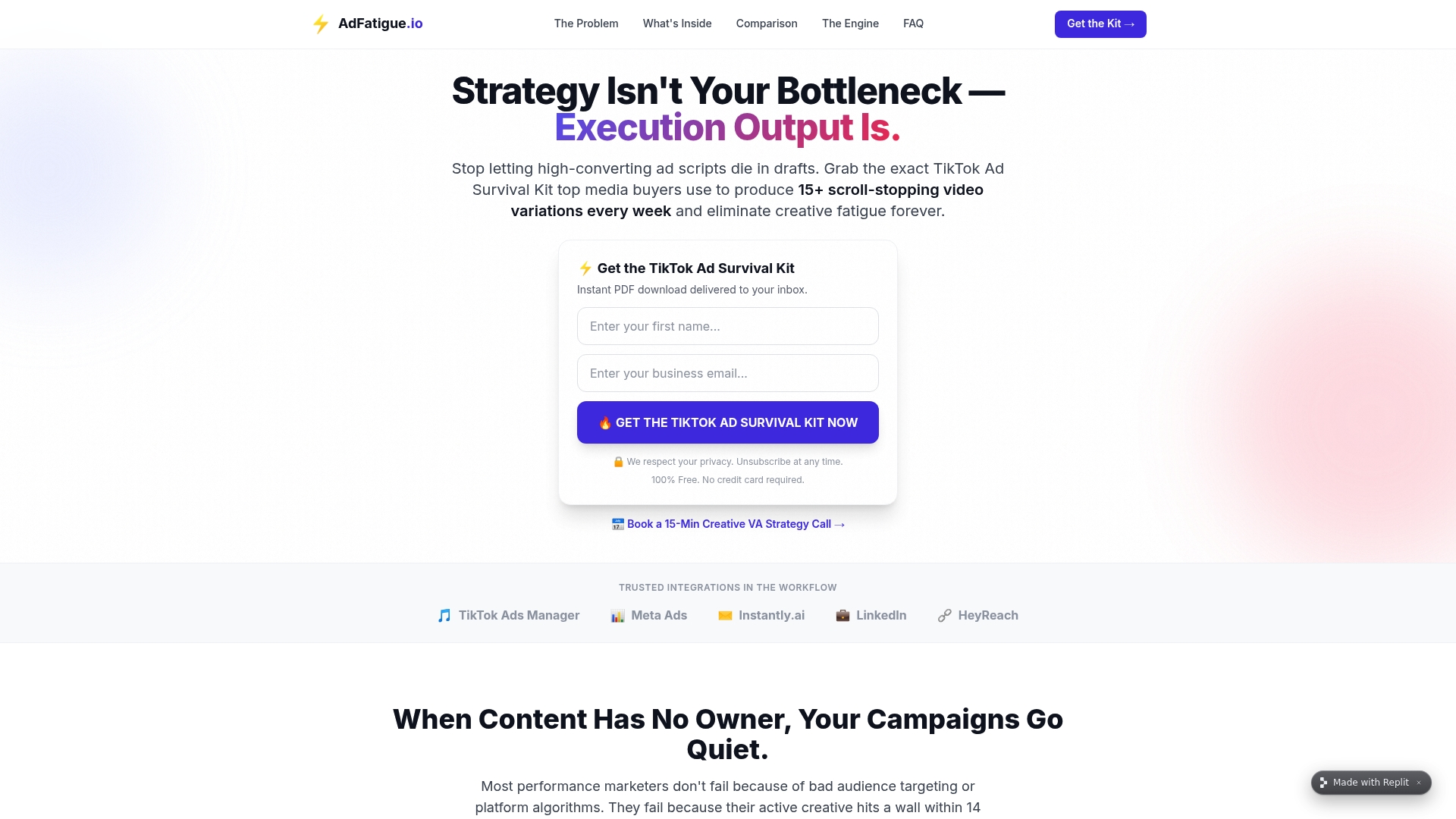
That turnaround matters most when creative fatigue is already setting in and you need fresh cuts across two or three platforms at once, not a single new hero spot. If you're managing outreach at scale too, some workflows extend into B2B distribution through integrated multi-account LinkedIn tooling.
If your team is stuck producing one length variant at a time, see how the managed creative workflow works and get a sense of what a 4-day turnaround on 15+ fresh hooks would do for your testing calendar.
Sources
FAQ
Is a 3-Minute Video Too Long for LinkedIn?
A 3-minute video technically fits within LinkedIn's 30-minute cap, but it's far longer than the platform's own recommended 15 to 30 second range for feed ads. Save longer content for owned channels, webinar promotion, or lower-funnel retargeting where viewers already expect depth.
How Much Does a 30-Second Commercial Cost?
Production costs vary widely depending on scope, talent, and location, so there's no single flat rate to quote. Instead of budgeting per finished minute, many teams now track cost per variation to justify producing several shorter cuts instead of one expensive spot.
Can I Post a 20-Minute Video on Facebook?
Facebook's technical limits allow uploads well beyond 20 minutes, but the platform's own behavior, like auto-splitting Stories after 10 seconds, makes long uploads impractical for most feed and Stories placements. Stick to 15 to 30 seconds for feed and Reels unless you're running content on an owned page rather than as a paid ad.
How Big Is a 30-Second Video File?
File size depends on resolution, bitrate, and codec rather than duration alone, so a 30-second clip can range from a few megabytes to several hundred. Exporting in H.264 with AAC audio at 1080p keeps most ads well under Meta's 4GB cap.
What's the Best Video Ad Length for a Tight Testing Budget?
Start with a 6-second and a 15-second cut from the same master asset before adding longer variants. Jamesyee's managed creative service is built specifically for teams that need several validated length cuts fast without commissioning a new shoot for each one.