
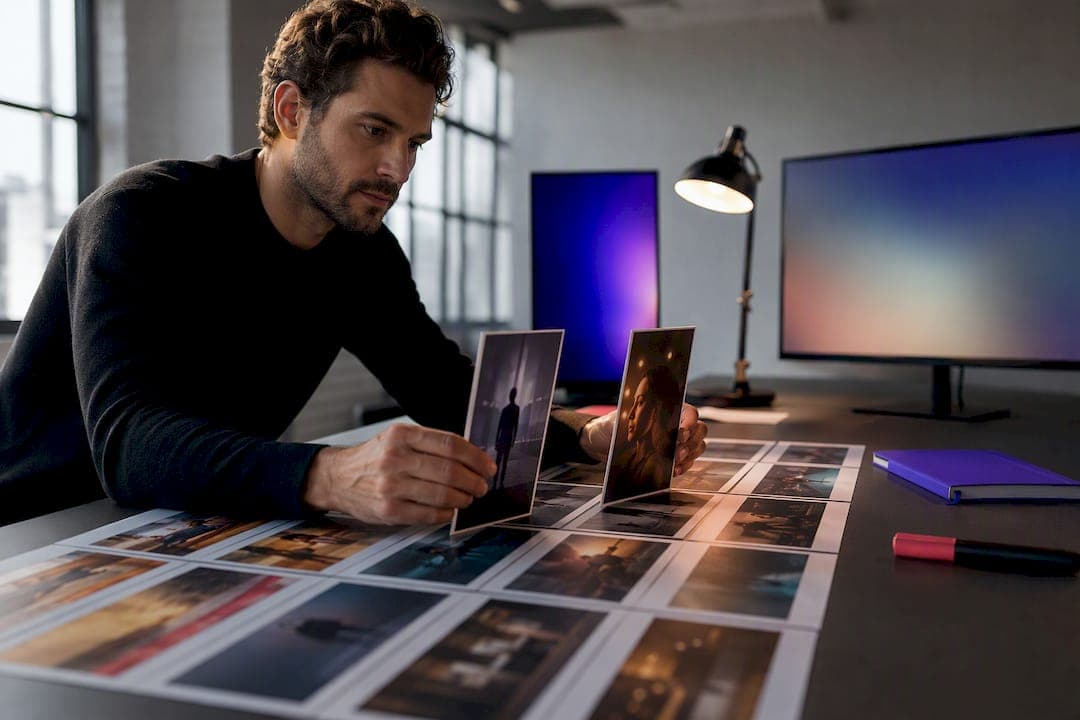
The highest-impact video ad hooks stop the scroll in one to three seconds by pairing a strong visual with on-screen text or an immediate audio cue, then introducing the brand early on when consideration or recall is the goal. This matters because 65% of viewers who watch the first few seconds of a video stay longer, and Think with Google's research into skippable formats backs up why that window decides most of a campaign's outcome.
TL;DR:
- Using pattern interrupts, movement, or contrast in the first one to three seconds increases the chance viewers will watch longer and improves ad distribution.
- Combining visual, text, and audio cues in the opening seconds boosts attention, especially when paired with early brand or product visibility.
- Testing multiple hook variants quickly and regularly helps identify the most effective approach for retention and conversions while reducing production costs.
- Vertical formatting and captions are essential for TikTok, Reels, and Facebook feeds, while YouTube Shorts and in-stream ads favor quick, single idea hooks within five seconds.
- simplifying production workflows through virtual assistants can generate dozens of high-quality hooks in 24 to 48 hours, lowering costs and accelerating testing.
Table of Contents
- 1. Proven hook types you can copy today
- 2. Why these hooks work: the attention science behind them
- 3. Platform-specific hook tactics that actually translate
- 4. How to test hooks and know what is actually working
- 5. A production workflow for turning one video into dozens of hooks
- 6. Three hook tests worth running next week
- 7. An easier way to keep hooks fresh without the production drag
- Sources
- FAQ
1. Proven hook types you can copy today
Hooks generally fall into three sensory channels: what people see, what they read, and what they hear. The strongest ads layer at least two of these in the opening seconds, since many viewers browse social feeds with the sound off, which makes on-screen text a backup channel rather than a decoration.
Visual hooks rely on movement, contrast, or an image that breaks the pattern of a normal feed. These work well for awareness campaigns where the goal is simply to earn the next two seconds of attention.
- A close-up on an unexpected object or texture, held for half a second before cutting wide.
- A person looking directly into the camera and starting mid-sentence, as if the viewer walked in on a conversation.
- A fast whip-pan or zoom that mimics the motion style already common in the platform's organic content.
- A visible before-and-after split screen shown in the first frame, not built up to.
- A product doing something it should not be able to do (bending, floating, multiplying) to trigger a double take.
Text-based hooks work when the claim itself is the attention grabber. They fit consideration and conversion goals because the copy can carry a specific promise instead of just novelty.
- "I wasted $400 before I figured this out."
- "Nobody tells you this about [category] before you buy."
- "This is the only [product type] that actually does X."
- "Stop doing [common habit]. Here's why."
- "3 things your [competitor category] won't tell you."
Audio hooks matter most on platforms where sound-on viewing is common, like YouTube and, increasingly, TikTok. A sharp sound effect, an unusual opening line of dialogue, or music that cuts in in mid-beat all signal "something is happening" before the visual even lands. Pairing an audio cue with on-screen text protects the hook for viewers watching either way.
UGC-style hooks borrow the visual grammar of organic content: handheld camera work, imperfect lighting, a person talking straight to the lens. They read as less like an ad and more like a recommendation, which is why they tend to outperform polished spots for consideration-stage retargeting.
Pattern interrupts are less a category and more a principle applied to any of the above. Cutting the shot every one to two seconds, reversing an expectation, or opening on a question the viewer did not expect all serve the same function: making the brain pause its scroll to resolve what it just saw. Platforms tend to reward interrupts placed in the first one to two seconds with better distribution and lower cost per impression, which makes this less a creative nicety and more a media-buying lever.
Match the hook to the objective before the platform: visual and pattern-interrupt hooks suit top-of-funnel awareness, text-led claims suit consideration, and UGC or direct-address hooks tend to convert best lower in the funnel where trust matters more than novelty.
2. Why these hooks work: the attention science behind them
The three-second mark is not an arbitrary cutoff. It is the point where a viewer decides, mostly unconsciously, whether the next ten seconds are worth their attention, and that decision predicts continued viewing two out of three times when the hook lands.
Think with Google's ABCD framework, which stands for Attract, Brand, Connect, Direct, treats the opening seconds as their own creative problem rather than an afterthought to the main pitch. The playbook recommends an emerging story arc instead of a slow build, along with at least two shots inside the first five seconds, since a static opening frame reads as an ad and invites a skip.
What the ABCD research recommends for the opening seconds:
- Use two or more distinct shots within the first five seconds rather than one static frame.
- Put brand or product elements naturally into the scene instead of a floating logo.
- Feature a person on screen where it fits the story, since faces tend to hold attention longer than objects alone.
- Build toward the payoff quickly rather than saving it for the end.
Tone changes the trade-offs. Humor tends to boost likability and share rates but can bury the brand message if the joke overshadows the product. Suspense holds attention longer but risks losing viewers who do not stick around for the resolution. Emotional openings work well for brand campaigns with longer view windows but perform less predictably in short, skippable formats where the payoff needs to arrive fast.
Introducing the brand early has a measurable upside. Bumper ads of about six seconds have driven notable product awareness lifts, and some cases have seen significant spikes in search interest after the campaign ran. That single data point is why "introduce the brand or product in the first five seconds" appears in nearly every piece of platform guidance on this topic, not as a branding preference but as a performance lever.

3. Platform-specific hook tactics that actually translate
A hook that works on YouTube rarely survives an unedited drop onto TikTok, and the reverse is just as true. Format constraints decide half the creative brief before a single word of copy gets written.
TikTok and Reels reward speed and imperfection. Vertical framing is non-negotiable, native captions should carry the hook line even with sound on, and the first cut should land inside the first second, not the first three. Trending audio can double as the hook itself if the visual sync is tight.
YouTube Shorts and in-stream skippable ads behave differently depending on format. Bumpers are capped at six seconds and work best as a single sharp idea rather than a story, while skippable in-stream ads have roughly five seconds before the skip button becomes available, which is exactly the window Think with Google's breakthrough research treats as make-or-break. Google Ads' video reach campaigns let advertisers mix bumpers, skippable formats, and Shorts in one buy, and can auto-generate vertical cuts from a horizontal master, which simplifies testing across formats without a full reshoot.
Meta feeds (Facebook and Instagram) still see heavy sound-off browsing, so burned-in captions are close to mandatory, and the first frame should work as a still image on its own, since autoplay previews often show before tapping.
LinkedIn rewards a more direct, less produced tone. A person speaking plainly to camera about a specific problem outperforms a polished montage, and the hook line should name the job title or pain point in the first sentence rather than easing into it.
Common mistakes that undercut otherwise strong hooks:
- Opening with copy so specific to one segment that it alienates everyone else in the audience.
- Placing a logo in a corner where it reads as an afterthought instead of part of the scene.
- Exporting a square or horizontal cut for a platform that expects vertical, which crops the hook out of frame entirely.
- Saving the most interesting visual for the third or fourth second instead of the first.
4. How to test hooks and know what is actually working
Testing hooks only works if the same handful of metrics gets tracked consistently across every variant. Watch three-second and ten-second retention first, since that gap shows whether the hook itself is doing its job before anything downstream. From there, track view-through rate, click-through rate, cost per acquisition, and, for brand campaigns, branded search lift.
A simple test structure that fits most budgets:
- Take one core video asset and cut three to five different opening hooks from it.
- Keep the body and offer identical across all variants so the hook is the only changed element.
- Run each variant with even budget for at least three to five days or until each reaches a few thousand impressions.
- Compare three-second and ten-second retention first, then layer in CTR and CPA once retention data separates the winners from the rest.
- Pause the weakest performers and reallocate budget to the top one or two hooks.
- Re-test the winner against a fresh challenger every few weeks to catch fatigue before it drags performance down.
Testing many small variants quickly tends to beat slow, infrequent big-production tests, since iteration speed matters more than any single asset's polish. A hook that wins on retention does not always win on CPA, and that trade-off is worth watching rather than assuming away: a highly memorable, brand-forward opening can lift recall while a blunter, offer-led hook converts better at the bottom of the funnel.
Pro Tip: Rotate in a fresh hook variant every one to two weeks and cap frequency around three to four impressions per user weekly to keep a winning ad from wearing out its welcome.
5. A production workflow for turning one video into dozens of hooks
Testing at the pace the data demands means treating hook production as a repeatable workflow, not a one-off shoot. A practical version looks like this: capture one raw video asset, extract six to ten frames or short clips from the opening seconds as hook candidates, build text-overlay and audio variants from each, export both vertical and horizontal cuts, then tag and queue everything for testing.
- Capture a single raw asset with enough coverage to pull multiple opening moments from it.
- Pull six to ten distinct opening frames or micro-clips as hook candidates.
- Layer in different text overlays and audio treatments on each candidate.
- Export vertical and horizontal versions so nothing gets lost to the wrong aspect ratio.
- Tag every variant by hook type and objective before it goes into testing.
This is close to the model Wing runs for marketers who need volume without a production team attached to every test. Clients working with managed creative virtual assistants have seen turnaround of 24 to 48 hours per batch and a 31% reduction in cost per acquisition once the hook rotation replaced a slower, agency-based cycle, a gap that mostly comes down to how many fresh variants get into testing each week rather than any single creative being better.
6. Three hook tests worth running next week
Run one awareness test (visual pattern interrupt), one consideration test (early brand cue versus delayed), and one conversion test (UGC direct address versus polished cut). Measure three-second retention for the first, view-through rate for the second, and CPA for the third. Declare a winner once each clears a few thousand impressions.
— James
7. An easier way to keep hooks fresh without the production drag
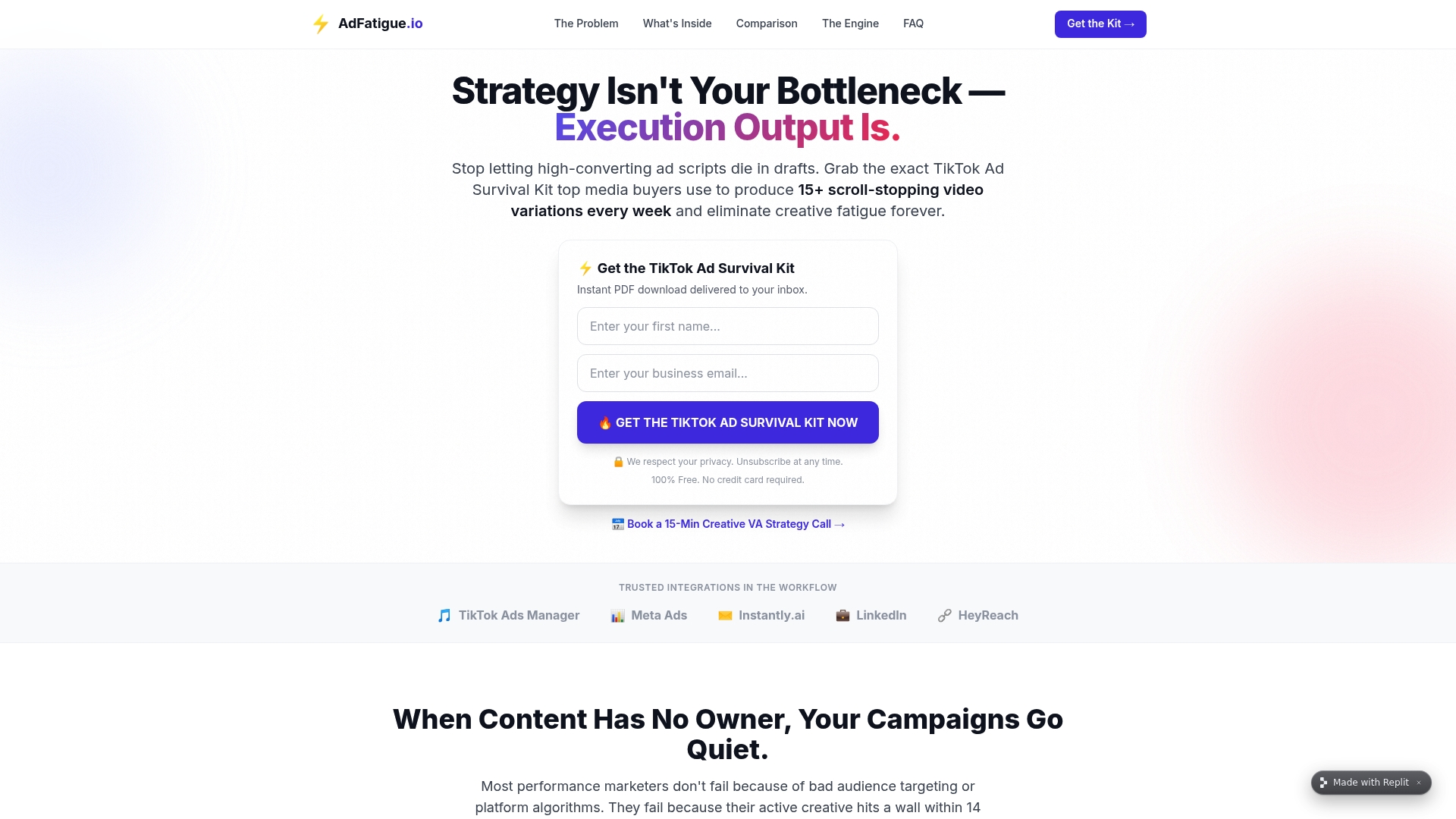
- Managed creative VAs handle the cutting, captioning, and export work across text, audio, and UGC-style variants.
Sources
- Video Marketing Statistics (HubSpot)
- Creating YouTube ads that break through in a skippable world (Think with Google)
FAQ
What is a good hook for an ad?
A good hook pairs a strong visual with on-screen text or sound within the first one to three seconds, since most viewers decide whether to keep watching by the three-second mark. The strongest hooks match the funnel stage: novelty for awareness, a specific claim for consideration, direct address for conversion.
What are some catchy hook examples?
Text-led examples include lines like "Nobody tells you this about [category] before you buy" or "I wasted money before I figured this out," both of which work because they promise specific, unresolved information. Visual examples include an unexpected close-up, a whip-pan, or a before-and-after split screen shown in the very first frame rather than built up to.
What's a good hook for a video?
The strongest video hooks use two or more shots in the first five seconds rather than one static frame, following the emerging story arc recommended in Think with Google's ABCD playbook. Introducing the brand or product naturally within that same window tends to improve consideration without hurting how long people keep watching.
What is a good marketing hook?
A good marketing hook combines curiosity or a specific pain point with a visual or audio cue that breaks the normal pattern of a feed, since platforms tend to reward that kind of interrupt with wider, cheaper distribution. For brands testing at volume, tools like Wing's managed hook production make it practical to run several hook variants against the same offer in a single week.