
UGC video ads are paid social ads built from creator or customer-style footage instead of polished studio production, and they consistently outperform traditional brand creative on cold placements because they look native to the feed. The single rule that determines whether one works: nail the first three to six seconds, because TikTok-verified research shows roughly 90% of an ad's total recall impact gets locked in during that opening window.
That changes how you should brief and produce every clip. Skip the logo intro. Skip the slow pan. Open on the hook, shoot vertical at 9:16, burn in captions, and keep the tone conversational rather than scripted.
- Format: Vertical 9:16, native to the platform feed.
- Hook window: First 3 to 6 seconds decide most of the recall outcome.
- Voice: Conversational, first-person, unpolished on purpose.
The 90% rule: Nearly all the recall value in a UGC video ad happens before the six-second mark. If your hook is weak, the rest of the edit barely matters.
Key Takeaways
UGC video ads outperform traditional creative because the first six seconds decide most of the outcome, and consistent hook testing paired with fast variant production is what sustains that advantage over time.
| Point | Details |
|---|---|
| Hook window is everything | The first 3 to 6 seconds drive roughly 90% of ad recall, so lead every clip with the strongest moment. |
| Match format to funnel stage | Use testimonial and before/after for considered purchases, demo and unboxing for lower-AOV impulse buys. |
| Lock down rights before you shoot | Get explicit written consent for paid usage and disclose paid or gifted relationships in the first 15 seconds. |
| Test in structured batches | Run 3 to 5 hook variants under ABO for 3 to 4 days, judging by hook rate before CTR or CPA. |
| Solve fatigue with faster output | Jamesyee's Wing Assistant turns one raw clip into multiple tested variants within 24 to 48 hours, supporting a reported CPA reduction. |
Table of Contents
- Why UGC Video Ads Outperform Traditional Ad Creative
- UGC Video Formats That Convert at Each Funnel Stage
- Sourcing UGC: Customers, Creators, Marketplaces, and AI
- The UGC Creative Brief and Production Rules That Actually Get Used
- Testing UGC Video Ads: A Framework for Finding Winners Fast
- Scaling UGC Without Burning Out Your Creative Pipeline
- Common UGC Ad Mistakes and How to Fix Them Fast
- Your UGC Ad Production Checklist and Templates
- What the Data Actually Says About "Authentic" UGC
- Turn One Raw Clip Into a Week of Winning Ad Variants
- Sources
Why UGC Video Ads Outperform Traditional Ad Creative
The performance gap between UGC-style ads and polished brand video isn't a matter of taste. It's a measurable pattern that shows up across CTR, CPC, and engagement benchmarks, and it traces back to two things: attention capture and disguise.
Start with attention. The CreatorIQ data on TikTok ad recall puts a hard number on something media buyers have suspected for years: viewers decide whether to keep watching almost immediately, and whatever happens in that first beat determines whether the ad registers at all. A UGC clip that opens mid-sentence, in a bedroom or a car, with bad lighting and a hand-held phone, reads as content rather than advertising. That reduces the instinctive skip reflex before the brand message even lands.
Then there's the performance data itself. Industry benchmarking from Feefo's research on UGC ads shows UGC creative achieving higher click-through rates and lower cost-per-click than traditional brand creative, with improved engagement and web conversion rates across multiple reports. Those aren't marginal gains. A CPC cut that size compounds across an entire account's spend, not just one ad set.
The mechanism behind the numbers is worth understanding, not just quoting. Native aesthetics delay ad-recognition. Platforms like TikTok and Instagram Reels reward content that keeps users on-platform longer, and their distribution algorithms read watch-through and re-watch behavior as quality signals. A UGC video that looks like a friend's story rather than a commercial earns more of that organic-feeling distribution, which lowers the effective cost to reach the same audience.
Three things drive the gap in practice:
- Delayed ad recognition means viewers watch longer before their brain files the content as "advertising" and disengages.
- Platform-native signals (completion rate, re-watches, shares) feed the same ranking systems organic content relies on, so well-made UGC gets cheaper reach than an obviously produced spot.
- Trust transfer happens faster when the presenter looks like a peer rather than an actor, particularly for considered purchases where social proof matters more than production value.
None of this means studio-quality video is dead. It means the job of a UGC video ad is different: it's built to survive the first scroll, not to win a design award. Judge it on hook rate and hold rate before you judge it on how it looks.
UGC Video Formats That Convert at Each Funnel Stage
Not every UGC format belongs at every stage of the funnel, and treating them interchangeably is one of the fastest ways to waste a media budget. Match the format to the buying decision the viewer is actually making.
- Testimonial / talking-head. A customer speaks directly to camera about a specific problem the product solved. Works best mid-to-bottom funnel, for considered purchases where trust is the blocker. Example prompt: "Tell me about the moment you almost gave up before you found [product]. What changed after two weeks?"
- Unboxing. First reaction to receiving and opening the product, shot in one continuous take. Strong for physical products under roughly $100 AOV where tactile presentation matters. Example prompt: "Film yourself opening the box for the first time, no script, just react."
- Before/after. A visual or stated transformation, often paired with a specific timeframe. Best for beauty, fitness, home, and anything with a visible or measurable result. Example prompt: "Show your skin/space/setup on day one, then again on day 14, with the same lighting and angle."
- Demo. The presenter uses the product on camera, walking through the actual function. Suited to top-of-funnel awareness for products with a "how does this even work" learning curve. Example prompt: "Show three ways you actually use this in a normal week, including one you didn't expect."
- GRWM / day-in-life. The product appears woven into a routine rather than as the star of the clip. Effective for lifestyle and beauty brands targeting cold audiences who respond better to context than a hard pitch. Example prompt: "Film your normal morning routine and mention where the product fits in, no hard sell."
- Skit / reaction. A short scripted or semi-scripted scenario, often with a comedic or relatable beat. Works well for younger audiences on TikTok and Reels where entertainment value earns the watch-through that carries the message. Example prompt: "Act out the 'before I found this' vs. 'after' scenario in under 20 seconds."
A few rules of thumb tie these together. Higher-AOV, higher-consideration products (subscriptions, skincare regimens, anything over roughly $150) lean on testimonial and before/after because trust is the bottleneck. Lower-AOV impulse products (accessories, snack foods, small home goods) do better with unboxing and demo because the barrier is simply "does this actually work as shown."
Funnel stage matters as much as category. Cold traffic responds to formats that feel like content first: day-in-life, skits, and demos that don't open with a pitch. Warmer audiences who've already seen the brand respond better to testimonial and before/after, because they're past the "what is this" question and need the "will this work for me" answer.
One underused move: pair a demo-format hook with a testimonial-format middle. Open on the product in action (the visual hook that stops the scroll), then let the second half carry the emotional case. That structure tends to outperform a single-format clip because it satisfies both the attention problem and the trust problem in one asset.
Sourcing UGC: Customers, Creators, Marketplaces, and AI
Getting raw footage is rarely the hard part. Getting footage you're legally allowed to run as a paid ad, with the right hook and the right permission trail, is where most teams stumble.
Sourcing from your own customers costs the least and often produces the most credible testimonials, because there's no performance incentive distorting the delivery. Ask directly, ideally within a week or two of purchase while the experience is fresh. Offer a modest incentive (a discount code, a small credit, or early access to a new product) and give a specific prompt rather than "send us a video." Something like "film 30 seconds showing the unboxing moment and one thing that surprised you" gets usable footage far more often than an open-ended ask.
Hiring individual creators or using a UGC marketplace trades cost for reliability and speed. Creator-shot UGC through a marketplace typically runs in the low hundreds of dollars per deliverable, while a fully produced studio-style spot can run into the thousands. The trade-off: marketplace creators are faster to book and cheaper per asset, but you'll get more variance in quality and need a tighter brief to control the outcome.
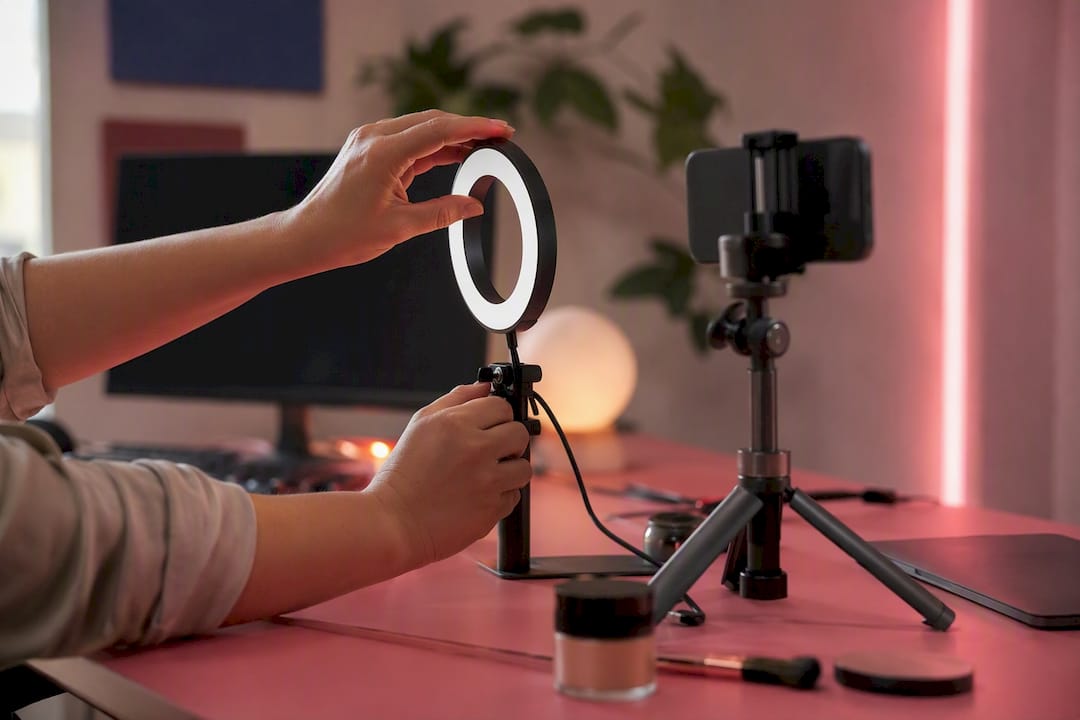
AI-generated UGC has a real place in the stack, but it's a volume-testing tool, not a replacement for human-shot footage across the board. Guidance on AI UGC tools notes that per-concept cost can drop to a fraction of a human shoot, which makes it useful for testing five hook variations before you spend real production budget on the winner. Where it consistently falls short: emotionally rich formats like heartfelt testimonials or genuine unboxing reactions, where an AI avatar's flatness becomes obvious the moment the message needs real feeling behind it.
Rights and disclosure are not optional. Getting a customer's Instagram Story is not the same as having permission to run that footage as a paid ad. You need explicit, written consent for paid usage every time, and Shopify's guidance on UGC ads is direct about this: verbal or DM agreement to "share this" does not cover advertising use. Build a simple release form into your sourcing workflow, whether that's a checkbox on a submission form or a signed one-pager for paid creators.
Disclosure compliance sits alongside rights. Any creator receiving payment or free product must disclose that relationship, and for video specifically, a verbal mention in the first 15 seconds or a persistent on-screen text overlay satisfies the standard FTC-aligned disclosure guidance that platforms and regulators expect.
- Ask customers within 1 to 2 weeks of purchase, with a specific prompt, not an open request.
- Budget low hundreds of dollars per creator-marketplace deliverable versus thousands for studio production.
- Reserve AI UGC for early-stage hook testing, not final emotional or unboxing assets.
- Store every release and disclosure record centrally, tied to the asset file name.
Pro Tip: Build your rights tracker before you need it. A spreadsheet with creator name, content ID, permission date, and expiration (if any) saves you from pulling a top-performing ad because legal can't confirm you're cleared to run it.
The UGC Creative Brief and Production Rules That Actually Get Used
A vague brief produces vague footage. The fix isn't a longer document, it's a tighter one that forces specificity on the parts that determine performance: the hook, the shot list, and the call to action.
A workable brief needs six fields, no more:
- Audience and problem. Who is this for, and what specific frustration does the product solve? Vague answers here produce vague hooks.
- Three hook variants. Give the creator three different opening lines to choose from or riff on, not one script. Variety here is what fuels your test loop later.
- Required shots. List the two or three non-negotiable moments (product in use, packaging visible, face-to-camera reaction) so the edit has raw material to work with.
- Call to action. The exact phrase or ask, spoken naturally rather than read off a card.
- Disclosure requirement. State explicitly whether this is a paid or gifted relationship and require the disclosure line or overlay.
- Delivery format. Vertical 9:16, minimum resolution, and raw unedited footage if you're doing the edit in-house.
Platform production rules are non-negotiable at this point in the market. Vertical 9:16 framing is table stakes across TikTok, Reels, and Stories placements. Every clip needs burned-in captions, both for accessibility and because a meaningful share of viewers watch with sound off. Natural, ambient audio outperforms a music bed for most UGC formats. It's part of what signals "real" rather than "produced." Duration targets vary by placement: 15 to 30 seconds tends to work for feed placements, while Stories and bumper-style slots can run shorter, down to 6 to 10 seconds, when the hook alone carries the message.
Editing UGC footage is a different discipline than editing a brand video. The instinct to polish works against you here. A few rules:
- Cut to the strongest moment first. Don't build up to the hook, open on it.
- Keep captions persistent throughout, not just on key lines.
- Preserve the raw, unpolished register. Smoothing out natural pauses or "umms" often makes the clip feel scripted, which kills the trust signal you're paying for.
- Trim dead air aggressively, but don't cut so tight that the pacing feels edited within an inch of its life.
- If you're testing hook variants from one raw clip, cut multiple versions with different openings before you touch the rest of the edit.
The goal of every editing pass is the same: keep what makes it look like content, remove what makes it feel long.
Testing UGC Video Ads: A Framework for Finding Winners Fast
Treat UGC ad testing the same way you'd treat any other paid social variable: structured, budgeted, and time-boxed, not "post it and see."
The standard approach among practitioners running high-volume UGC programs is to brief 3 to 5 hook variants per concept and test them either under ABO (ad set budget optimization) or a disciplined A/B structure at modest spend per variant. The point isn't to find the "best video," it's to isolate which opening three seconds earns attention, because that's the variable TikTok's own recall data says matters most.
Watch these metrics in order of diagnostic value:
- Hook rate (thumbstop rate). The percentage of viewers who keep watching past the first 3 seconds. This is your earliest and most honest signal.
- Hold rate / watch-through. How far viewers get into the clip. A weak hold rate after a strong hook usually means the middle of the video drags.
- CTR. Click-through confirms the message, not just the opening, is doing its job.
- Micro-conversions. Add-to-cart, email capture, or landing page scroll depth, depending on your funnel, tell you whether the click was qualified.
- CPA trajectory. The metric that ultimately decides whether a winning creative is a winning investment.
Test math: Five hook variants at a modest daily budget each, run for 3 to 4 days before judging, gives you enough signal to separate a real winner from noise without burning a full test budget on underperformers.
Scale, kill, and refresh decisions follow the same logic every time. Kill a variant once hook rate falls meaningfully below your account average with statistically reasonable spend behind it, don't wait for CPA to confirm what hook rate already told you. Scale a winner by increasing budget in increments rather than doubling overnight, which tends to reset the algorithm's learning phase. Refresh proactively: the earliest sign of creative fatigue is a rising CPA on a previously stable ad paired with a declining hook rate, and that combination shows up before frequency metrics do.
Routing matters as much as the creative itself. Cold traffic from a UGC ad that lands on a generic product page loses much of the narrative momentum the video built. A pre-sell or narrative landing page that continues the story the ad started, rather than resetting the visitor into a standard catalog page, tends to convert meaningfully better than sending the same traffic straight to a PDP.
Scaling UGC Without Burning Out Your Creative Pipeline
Creative fatigue is the quiet killer of UGC programs. A hook that performs for two weeks stops performing in week three, not because the product changed, but because the same audience has now seen it three or four times. The teams that keep winning treat volume and refresh cadence as a production problem to solve, not a budget problem to absorb.
The practical fix is a managed output model: one raw piece of footage gets turned into multiple tested variants, fast, instead of a single finished ad going through a slow agency cycle. This is exactly the gap Jamesyee's Wing Assistant service is built to close. Rather than briefing an agency and waiting days for a handful of deliverables, dedicated virtual assistants take one raw UGC clip and produce multiple ad variations, different hooks, different cuts, different caption treatments, within a 24 to 48 hour turnaround.

That speed changes what a test loop actually looks like in practice. A team running the ABO structure described above needs a steady supply of fresh hook variants to keep feeding the loop; a slow production cycle bottlenecks the whole system regardless of how disciplined the testing framework is.
Operationally, plugging a managed output model into your existing cadence takes three things:
- Delivery SLAs. Know exactly when new variants land each week so your media buyer can plan test slots around them rather than scrambling.
- Review windows. Build a short daily or twice-weekly check to approve new cuts before they go live, so quality control doesn't slow down the turnaround advantage.
- Refresh triggers. Tie new variant requests to the same hook-rate decline signal used in testing, not a fixed calendar schedule, so refresh happens when performance actually needs it.
Pro Tip: Send your raw footage in batches of three to five clips at a time rather than one at a time. It gives the production team enough material to generate genuinely different hook angles instead of minor edits of the same cut.
The larger point: performance marketers rarely lose to bad creative ideas. They lose to not having enough fresh variants ready when the current ones start decaying, and that's a supply problem, not a strategy problem.
Common UGC Ad Mistakes and How to Fix Them Fast
Most underperforming UGC campaigns fail for a small set of repeatable reasons, and every one of them has a quick fix.
- Mismatched landing pages. The ad sells a story, the page sells a catalog. Fix: build a pre-sell page that continues the ad's specific narrative before routing to checkout.
- Weak hooks. A slow build before the point lands loses viewers before the message registers. Fix: rewrite the first line to state the outcome or the surprise immediately, then explain.
- Poor or missing captions. Silent scrollers skip anything they can't read in two seconds. Fix: burn in captions on every clip, no exceptions, even for "obviously visual" formats like unboxing.
- Missing usage releases. Great footage you can't legally run is a wasted asset. Fix: build the release request into your sourcing form, before the footage arrives, not after.
- Over-polishing UGC. Smoothing out natural pauses, adding music beds, and color-grading UGC footage strips away exactly what made it perform. Fix: edit for pacing and clarity, not for gloss.
Choosing between human creators and AI comes down to the emotional weight of the format. Save AI generation for early hook testing and low-stakes demo formats where volume matters more than nuance. Reserve human creators for testimonials, unboxing, and anything where genuine reaction is the entire point. Mixing the two intelligently, AI for the funnel, humans for the close, beats defaulting to either one exclusively.
Your UGC Ad Production Checklist and Templates
Turning everything above into a repeatable system means having three artifacts ready before your next production cycle starts: a brief template, a test plan, and a rights checklist.
Copy-ready brief template:
- Audience and core problem statement (one sentence).
- Three hook variants, written as spoken lines, not stage directions. Example: "I almost returned this after day one, here's what changed."
- Required shots (2 to 3 non-negotiable moments).
- Exact CTA phrasing.
- Disclosure requirement (paid, gifted, or neither).
- Delivery specs: vertical 9:16, raw footage, minimum length.
Three-step test plan:
- Launch. Run 3 to 5 hook variants under ABO at a modest daily budget per variant for 3 to 4 days.
- Evaluate. Rank by hook rate first, hold rate second, CTR third. Kill anything meaningfully below account average.
- Scale and route. Increase budget on the winner in steps, and send its traffic to a pre-sell page that continues the ad's narrative rather than a generic product page.
Rights and release checklist:
- Written or checkbox consent specifically for paid ad usage, not just organic reposting.
- Disclosure line or overlay for any paid or gifted relationship, placed in the first 15 seconds or persistent on-screen.
- Central storage of every release tied to the file name and expiration date, if one applies.
- A named owner on the team responsible for confirming rights before an asset goes live.
| Checklist item | Why it matters |
|---|---|
| Three hook variants per brief | Fuels the test loop without waiting on new footage |
| Vertical 9:16, captions on | Matches platform-native format and accessibility standards |
| Written paid-use consent | Legally required before running customer footage as an ad |
| Pre-sell landing page routing | Preserves narrative momentum from ad to conversion |
What the Data Actually Says About "Authentic" UGC
Most advice on UGC video ads treats "authenticity" like an aesthetic choice, something you can bolt onto a shoot by asking a creator to be "more natural." That framing gets it backwards. Authenticity isn't a style, it's the byproduct of specificity: a real problem, a real hook, a real moment on camera that wasn't over-directed. Treat UGC as a performance format with the same rigor you'd apply to any paid channel, brief it, test it, measure hook rate before you judge it on vibes, and the "authentic feel" tends to follow on its own.
The bigger gap in most programs isn't creative talent, it's throughput. Teams with strong creative instincts still lose to creative fatigue because they can't produce enough tested variants fast enough to stay ahead of audience saturation. That's a production and workflow problem before it's a strategy problem, and it's exactly why a managed output model that compresses turnaround from days to 24 or 48 hours changes the math more than another round of brainstorming ever will.
If there's one thing worth prioritizing above everything else in this article, it's building the supply chain for fresh hooks before you need it, not after your best-performing ad starts declining.
— James
Turn One Raw Clip Into a Week of Winning Ad Variants
Most performance teams don't have a creative-idea problem, they have a creative-supply problem: one good UGC clip, and no fast way to turn it into the five or six variants a real test loop needs. Jamesyee's Wing Assistant closes that gap directly. Dedicated virtual assistants take your raw footage and produce multiple tested ad variations within 24 to 48 hours, instead of the days or weeks a traditional agency cycle takes for a fraction of the output.
That speed is what lets you actually run the testing framework covered above rather than settling for whatever creative happens to survive a slow production queue. If your team is spending more time chasing creators and editors than analyzing test results, see how the managed VA workflow handles ad fatigue and get a sense of what a 4-day turnaround on 15+ fresh hooks actually looks like for your account.