
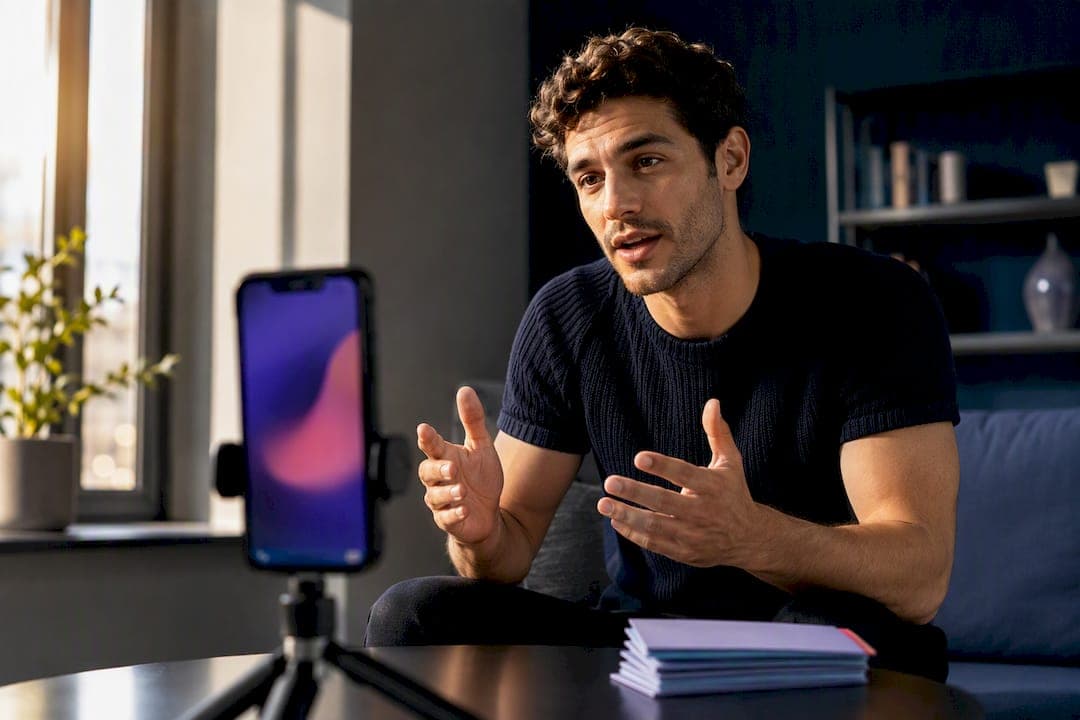
The fastest reliable way to produce native TikTok ad scripts is a four-part framework: hook (0 to 3 seconds), value or agitation (3 to 15 seconds), proof (15 to 20 seconds), and an outcome-tied CTA (20 seconds and beyond). Pairing fill-in templates with AI generators lets you batch several variations in an afternoon. Keep total runtime between 9 and 30 seconds, with 9 to 15 seconds as the retention sweet spot.
TL;DR:
- Shorter, native-sounding scripts of 9 to 15 seconds maximize viewer retention and focus on delivering the hook within the first three seconds.
- Using three to four variations of hooks and edited, filmed, and tested weekly helps optimize performance while maintaining authentic, imperfect delivery.
- AI tools speed up ideation but require editing and adding specific details to ensure scripts sound natural and engaging in conversation tone.
- Early testing should prioritize save and share rates, comment depth, and click-throughs compared to views, with regular creative refreshes to manage fatigue.
- Balancing speed and native voice over polish involves narrow legal review and using virtual assistants to produce multiple variations efficiently.
Table of Contents
- Seven fill-in-the-blank TikTok ad script templates
- A step-by-step workflow from brief to finished ad
- Getting native-sounding scripts out of AI tools
- Why 2026 native style rewards imperfection over polish
- Testing cadence and the metrics that actually predict fatigue
- Balancing speed, native voice, and brand controls
- A faster route when you'd rather not script every variation yourself
- Sources
- FAQ
Seven fill-in-the-blank TikTok ad script templates
Templates exist so you stop staring at a blank page and start filming. Each one below follows the same skeleton: a hook line for the first 3 seconds, timestamped body copy, a proof beat, and a CTA tied to the outcome the viewer wants.
- UGC testimonial: Hook (0 to 3s), "I almost didn't buy this." Body (3 to 15s), "Here's what changed my mind." Proof (15 to 20s), show the result on camera. CTA (20s+), "Link is right here if you want to try it."
- POV story: Hook, "POV: you just realized your [problem] has a name." Body, walk through the moment of recognition. Proof, a quick before-and-after cut. CTA, "Tap the link to see how I fixed it."
- Before and after: Hook, "This took me 3 weeks to fix." Body, show the starting point. Proof, show the end state with a timestamp overlay. CTA, "Yours could look like this too."
- Demo: Hook, "Watch what happens when I [action]." Body, narrate the steps in real time. Proof, the payoff moment on screen. CTA, "Get it here before it sells out."
- Curiosity or open loop: Hook, "Nobody tells you this about [topic]." Body, tease the answer without giving it away. Proof, deliver the payoff late, around second 15. CTA, "Full breakdown is linked below."
- Product reveal: Hook, "I wasn't going to post this, but." Body, unveil the product mid-sentence. Proof, a close-up or reaction shot. CTA, "It's already back in stock, grab it."
- Urgency: Hook, "This deal ends tonight." Body, state the offer plainly. Proof, show the countdown or price. CTA, "Don't scroll past this one."
A filled example for a fictional skincare brand: Hook (0 to 3s), "My skin used to break out every time I traveled." Body (3 to 12s), "Turns out it was the water, not the food." Proof (12 to 18s), close-up of clear skin with a small on-screen label reading "Day 14." CTA (18 to 22s), "Linked below if you want to test it yourself."
A step-by-step workflow from brief to finished ad
A tight brief prevents wasted filming. Spend 90 seconds filling in five fields before anyone picks up a camera: the audience, the single product benefit, the tone (casual, deadpan, excited), the target duration, and one or two candidate hooks. Skipping the brief is the single biggest reason teams reshoot.
- Generate three hook options per concept and pick one based on which reads fastest out loud.
- Timestamp every line in the script so the person filming knows exactly what to say and when.
- Film 2 to 3 delivery variations per line: one straight, one with a pause, one with a slight ad-lib.
- Edit with fast cuts every 2 to 3 seconds, place on-screen text in the upper third so it clears the caption bar, and choose sound that matches the pacing rather than fighting it.
- Export at the platform's native aspect ratio and label the file with product, hook variant, and date before it goes into testing.
Pro Tip: Name files like "skincare_hook3_travel_0214" so anyone on the team can find and compare variants without opening them first.
Getting native-sounding scripts out of AI tools
TikTok's own AI Script Generator, available through a business account in Creative Center, was built to help advertisers produce script ideas quickly. It speeds up ideation, but raw output almost always needs editing before it sounds like a person talking instead of a brand reading a brief.
- Feed the generator five fields: audience, product benefit, tone, format and duration, and one or two sample hooks you already like.
- Shorten anything the tool writes in full sentences. TikTok scripts read more like text messages than paragraphs.
- Add one small, specific detail the AI wouldn't guess, like a location, a timestamp, or a brand of coffee mug in the background.
- Keep the voice conversational by reading the line aloud and cutting any word you wouldn't actually say to a friend.
- Use the platform-native generator for format-specific ideas tied to current trends, and reserve third-party tools for volume batching when you need a dozen hook variants fast.
The fastest loop is generate three, pick one, edit for imperfection, film it, and move to the next concept. Teams that treat AI output as a finished script instead of a rough draft are the ones whose ads feel obviously scripted.
Why 2026 native style rewards imperfection over polish

Trend analysis heading into 2026 points to three shifts worth building into every script: authenticity over gloss, curiosity-led pacing, and what's being called Emotional ROI, where viewers save or share content that rewards them emotionally, not just informationally. A script that opens a loop and pays it off late, invites a comment, or asks viewers to tag a friend tends to outperform one that simply states a feature.
About 90% of an ad's recall impact happens in the first six seconds, according to Sprout Social's TikTok ads guide, which is why the hook line deserves more editing time than the rest of the script combined.
Save-worthiness is becoming a stronger objective than raw view counts.
Legal and brand review still matter, but scope the review to claims and disclosures rather than tone. A candid, slightly imperfect delivery is often the point, not a flaw to correct.
— James
Testing cadence and the metrics that actually predict fatigue
Set up a simple test matrix: two or three hook variants against two CTA variants, labeled by concept and date so results are easy to trace back to a specific line. Refresh creative weekly in early testing phases, a cadence Sprout Social recommends to stay ahead of fatigue signals, and lean on tools like TikTok Symphony or Smart+ to catch underperforming creative automatically.
- Watch save rate and share rate before view count, since both signal content worth rewatching.
- Track comment depth, not just comment count, since real replies indicate genuine interest.
- Compare click-through rate against downstream conversion, not just clicks in isolation.
- Pause a creative once frequency climbs and cost per result rises for three straight days, rather than waiting for a full week of decline.
A practical testing system built around this kind of weekly refresh cadence can help teams formalize the process instead of reacting ad hoc.
Balancing speed, native voice, and brand controls
Early creative tests reward speed over polish. A rough hook filmed today beats a perfect one filmed next week. The real trade-off is knowing when to loop in legal or brand review, and keeping that review narrow so it checks claims, not tone, since over-editing is what kills the native feel that makes these ads work in the first place.
— James
A faster route when you'd rather not script every variation yourself
Writing and filming a dozen script variations a week is a lot to sustain alongside everything else on a marketing calendar. Managed virtual assistants can take a single raw video and turn it into multiple testable ad variations, often with faster turnaround than traditional agencies.
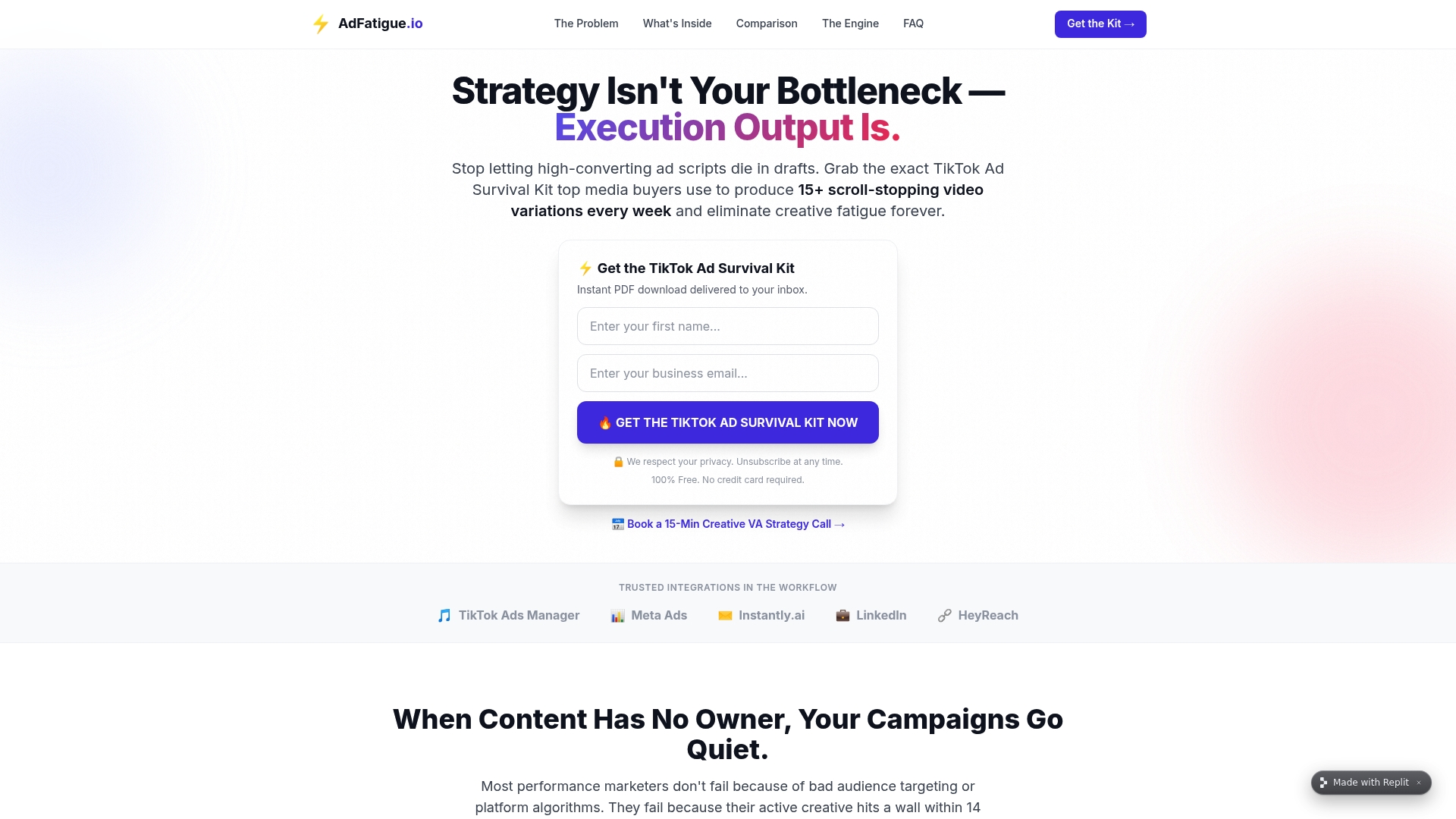
If you'd rather hand off execution and focus on strategy, see how weekly hook delivery works and check whether it fits your testing cadence.
Sources
- How to Run Successful TikTok Ads in 2026 | Sprout Social
- How to Make Better TikTok Ads: TikTok AI Script Generator | Social Media Examiner
- Passive scrolling is dead — TikTok Next 2026 trend summary | Zoomsphere
FAQ
Does TikTok pay $1 per 1,000 views?
No, TikTok's Creator Fund and related monetization programs pay varying rates depending on the program and region, and payout amounts are not flat per set of views. This question usually confuses organic creator payouts with advertiser costs, which are a separate system entirely.
Why does TikTok feel like it's mostly ads now?
TikTok has expanded ad formats and automated creative tools like Symphony and Smart+, which increases how often sponsored content appears in the For You feed. The platform also pushes advertisers toward frequent creative refresh, which means more native-style ads blending into the scroll rather than fewer, more obvious ones.
Can I create TikTok ads using AI?
Yes, TikTok's own AI Script Generator in Creative Center helps generate script ideas directly from a business account. Third-party tools can also batch hook variations, though both typically need human editing to sound native.
What makes a TikTok ad script effective?
An effective script follows a four-part structure: a hook in the first 3 seconds, a value or agitation section, a proof point, and a CTA tied to the outcome the viewer wants. Scripts that read like a message from a friend, rather than a brand statement, tend to hold attention longer.
How often should I refresh my TikTok ad creative?
Weekly refresh is a common early-phase cadence recommended to stay ahead of creative fatigue, according to Sprout Social. Watching save rate, share rate, and comment depth alongside cost per result helps you decide when a specific creative needs to be paused or replaced.