

LinkedIn account warmup is a required, staged increase of activity: start slow for 2 to 4 weeks before scaling outreach, rather than jumping straight into connection requests and messages. New or dormant accounts that skip this step face a higher restriction risk, while a gradual ramp improves acceptance rates and keeps engagement signals healthy from day one.
TL;DR:
- Beginning LinkedIn outreach with a slow, staged warmup reduces restrictions and improves acceptance rates, especially for new or dormant accounts.
- The 14-day fast preset is suitable for established accounts with a history of activity, while the 30-day conservative preset is safer for newer or recently restricted accounts.
- Maintaining a complete, credible profile with recent activity and clear positioning significantly boosts request acceptance during warmup.
- Regular monitoring of acceptance and reply rates, along with adapting volume increases, helps avoid flags and account restrictions.
- After a pause or long inactivity, treat the account as new by restarting with a conservative preset and gradually increasing activity.
Table of Contents
- Quick warmup schedules: 14-day fast and 30-day conservative presets
- Profile optimization checklist before you start warming up
- Week-by-week warmup plan with daily actions and monitoring checkpoints
- Automation, safe limits, and red flags to watch
- How to scale outreach after warmup while preserving account health
- Common mistakes, troubleshooting, and recovery if your account is flagged
- What happens when warmup ends and how to resume safely
- Metrics to track progress and success of warmup
- Examples of successful warmup strategies
- How to tailor warmup based on account age and activity level
- What experience with outreach pacing teaches about warmup
- A faster way to keep outreach and ad creative moving together
- FAQ
Quick warmup schedules: 14-day fast and 30-day conservative presets
Pick a preset based on how much risk you can tolerate and how new your account is. Both work, but they ramp at different speeds.
The 14-day fast preset suits accounts with some history, a complete profile, and no prior warnings:
- Days 1 to 3: 3 to 5 connection requests, 10 to 15 profile views, 5 to 8 likes or comments, no messages.
- Days 4 to 6: 8 to 10 connection requests, 15 to 20 profile views, 10 likes or comments, 2 to 3 messages to accepted connections only.
- Days 7 to 10: 12 to 15 connection requests, 1 short post or share, 10 to 12 likes or comments, 5 messages.
- Days 11 to 14: 18 to 20 connection requests, 2 posts across the period, steady engagement, 8 to 10 messages, moving toward normal outreach volume.
The 30-day conservative preset suits brand-new accounts, previously flagged accounts, or anyone returning after a long dormant period:
- Week 1: 2 to 4 connection requests per day, light browsing and profile views, a handful of likes, zero messages.
- Week 2: 5 to 7 connection requests per day, 1 post, light commenting on posts in your industry, 1 to 2 messages only to people you already know.
- Week 3: 8 to 10 connection requests per day, 2 posts across the week, broader commenting, 3 to 5 messages to accepted connections.
- Week 4: 10 to 15 connection requests per day, consistent posting, outreach messages introduced gradually, watching acceptance rate before any further increase.
Decision rules for which preset to run:
- Choose the fast preset only if your account is older, has an existing network, and has never received a warning.
- Choose the conservative preset if the account is fairly new, was recently restricted, or has a thin profile with few connections.
- Drop back to the previous week's volume on either preset if your acceptance rate falls below 30% or if LinkedIn shows a verification prompt.
- Treat the 30-day preset as the default when in doubt. A slower ramp costs you a couple of weeks; a restriction costs you the account.
Neither preset depends on specialized software. A spreadsheet tracking daily counts and outcomes is enough to run either one manually, though the same staged-ramp logic is what vendor warmup settings automate once you move into outreach tools.
Profile optimization checklist before you start warming up
A thin or inactive-looking profile drags down acceptance rates no matter how carefully you pace your activity, so fix the profile first.
- Add a clear, recent headshot and a banner image, since a photo-less profile reads as inactive or fake to anyone deciding whether to accept your request.
- Write a role-focused headline that states what you do and who you help, not just a job title.
- Fill in location, industry, current role, and at least one piece of contact information so your profile looks complete at a glance.
- Write a short, first-person summary: 3 to 5 sentences on what you do and the problems you solve, not a resume paste.
- Add concise, outcome-focused bullets to your current and past experience entries instead of long paragraphs.
- Publish one or two recent posts or shares before you start sending requests, and request at least one recommendation from a colleague or client.
Each of these is a small edit, but together they change how a stranger reads your profile in the three seconds before deciding to accept or ignore your request. An account with a photo, a specific headline, and visible recent activity consistently reads as more credible than a bare-bones profile, even before warmup begins.
Pro Tip: Rewrite your headline to name the specific audience you serve (for example, "Helping ops teams at mid-market SaaS companies cut onboarding time") rather than a generic title. It reads as more trustworthy to the exact prospects you plan to message.
Week-by-week warmup plan with daily actions and monitoring checkpoints
A day-by-day plan removes the guesswork of "how much is too much" on any given day.
- Days 1 to 2: log in at your normal time, browse your feed, view 10 to 15 profiles in your target industry, like 5 posts. No connection requests yet.
- Days 3 to 5: send 3 to 5 connection requests daily, prioritizing people you already know, shared groups, or shared companies. Comment on 2 to 3 posts daily.
- Days 6 to 8: increase to 5 to 8 requests daily, publish your first post, reply to any comments you receive, and send 1 to 2 messages only to people who have already accepted.
- Days 9 to 12: raise to 8 to 10 requests daily, post again, and send 3 to 5 personalized messages to recent connections, mixing in profile visits to passive prospects.
- Days 13 to 14 (end of fast preset) or days 13 to 20 (mid conservative preset): hold steady at the prior day's volume for at least 3 consecutive days before raising it again, and only raise it if acceptance and reply rates are stable.
- Final stretch to day 30 (conservative only): step up requests by small increments every 4 to 5 days, add a weekly posting cadence, and introduce cold outreach messages at low volume.
On templates, personalize every message with something specific: a shared group, a recent post the person made, or a mutual connection, rather than a copy-paste opener. Prioritizing people in mutual groups or at companies you already have a connection to produces noticeably higher acceptance than blind cold outreach, a pattern experienced LinkedIn users consistently report when they sequence warm contacts before cold ones.
Build in monitoring checkpoints rather than running the schedule blind:
- Track your daily acceptance rate; if it drops below 25 to 30%, pause increases for 3 to 4 days.
- Watch your message response rate; a sudden drop after a volume increase is a signal to step back down.
- Note any LinkedIn notice, warning banner, or verification prompt, and treat any of them as a hard stop on further increases until it clears.
- Keep a simple log (date, requests sent, acceptances, messages sent, replies) so you can spot a trend instead of reacting to a single bad day.
Automation, safe limits, and red flags to watch
Vendor automation tools typically offer a built-in warmup feature that queues a gradual ramp automatically rather than requiring you to track caps by hand. That differs from manual warmup mainly in consistency: the tool enforces the daily caps every day, where a manual approach depends on you remembering to check your own numbers.
A common recommended starting point across practical automation guides is a handful of connection requests per day, increased gradually over several weeks rather than all at once. That single rule, start low and raise slowly, is the core of every schedule in this article.
A practical adaptive rule once you are past the initial warmup: raise your daily volume only after 3 to 5 consecutive days of stable acceptance and reply rates, and raise it by a small increment each time rather than doubling it. If any metric drops after an increase, hold or step back down before trying again.
Watch for these red flags:
- A sudden surge in declined connection requests compared to your recent average.
- Any in-app notice, warning, or temporary restriction message from LinkedIn.
- A sharp, unexplained drop in profile views, post impressions, or message replies within a day or two of increasing volume.
- Requests to verify your identity or confirm you are not a bot.
If any of these appear, pause all outbound activity immediately, drop back to a lower daily volume once you resume, and avoid introducing any new tool or template until your metrics stabilize for at least a week.
How to scale outreach after warmup while preserving account health
Once warmup ends, scale outreach in the same incremental style rather than switching straight to full volume.
- Raise your daily connection and message volume by roughly 10 to 20% at a time, and only after your acceptance and response rates have held steady for several days at the current level.
- Check your acceptance rate and reply rate before every increase; a flat or dropping trend means hold, not push.
- Segment your outreach list: warm contacts (people you know, mutual groups, engaged followers) can receive more direct messages sooner, while cold prospects need a slower cadence and more personalization.
- Give warm and cold segments separate message templates rather than reusing one script across both.
- Refresh your profile every few months: update your headline as your role or focus shifts, add new posts, and request fresh recommendations so the profile keeps signaling activity.
- Rotate post formats (text updates, short articles, document carousels) and retest message variants every few weeks rather than running the same script indefinitely.
Treat scaling as a continuation of warmup logic, not a separate phase: small increases, a pause point built into every step, and segmentation that matches effort to how warm the relationship already is.
Common mistakes, troubleshooting, and recovery if your account is flagged
The most frequent trigger is simple: too many requests too fast, combined with templated, unpersonalized messages and ignoring early warning signs instead of slowing down.
If you get flagged or restricted, move through this sequence:
- Pause all outbound activity immediately, including any automation tool, and stop sending new requests or messages.
- Secure your account: confirm your password is strong, check for unfamiliar login activity, and reply only to legitimate emails from LinkedIn itself, never a link in an unsolicited message.
- Contact LinkedIn support through official channels if the restriction seems incorrect, rather than trying to work around it.
- After the restriction clears, treat the account as new: run the 30-day conservative preset again, and keep a log of what you changed so you do not repeat the same ramp-up mistake.
What happens when warmup ends and how to resume safely
Warmup does not have a hard finish line so much as a point where your account has shown LinkedIn a stable, human-looking pattern of activity. At that point, higher daily volumes become lower risk, but "ending" warmup does not mean activity stops mattering: the same monitoring habits still apply, just at a higher ceiling.
If you stop using a campaign or automation tool for a stretch and then come back, vendor warmup logic in many cases picks back up rather than discarding prior progress. Vendor documentation on this kind of feature describes it as queued and resumable: progress pauses when a campaign goes inactive and picks back up once the campaign is reactivated, rather than resetting to zero.
If you take a break manually, for a vacation, a role change, or simply inactivity, treat a gap of more than two or three weeks as a signal to resume gently. Start at roughly half your pre-break daily volume for the first week back, watch your acceptance and reply rates, and step back up to full volume over the following week or two if those numbers hold steady.
The safest mental model is this: warmup builds trust with the algorithm, and trust decays slowly with inactivity but does not vanish instantly. Resuming at full speed after a long gap puts you back closer to new-account risk than most people expect, so the staged-ramp habit is worth keeping permanently, not just during the first month.

Metrics to track progress and success of warmup
A handful of numbers tell you whether warmup is working, and all of them come from your own activity log rather than a single vanity metric.
Track your acceptance rate first: the percentage of connection requests that get accepted. A stable or rising acceptance rate as you increase volume is the clearest sign your pacing is sound.
Track your reply rate on messages separately from acceptance rate, since a prospect can accept a connection and still ignore outreach. A falling reply rate even while acceptance holds steady often points to weak personalization rather than a pacing problem.
Watch engagement on your own posts (likes, comments, shares) as a secondary signal: steady or growing engagement suggests your profile and content are landing with the right audience. Finally, keep an eye on any platform notice or restriction warning as a binary health check: zero warnings is the goal, and even one is worth treating as a reason to slow down before raising volume again.
Logging these weekly, rather than daily, smooths out normal day-to-day noise and makes a real trend easier to spot.
Examples of successful warmup strategies
The pattern behind every warmup approach that works is the same regardless of the exact numbers used: start with people you already have some connection to, not cold strangers.
A common sequence reported by experienced LinkedIn users is to connect first with colleagues, former classmates, and existing contacts, then expand outward to second-degree connections and people in shared groups, and only then move into genuinely cold outreach. This front-loads easy acceptances, which builds a healthy ratio before the harder cold requests start arriving.
Another approach that tends to work well combines light content activity with connection requests rather than running outreach in isolation: posting or commenting a few times a week while sending a modest, steady number of requests signals an active, real account rather than a bot account that appeared overnight and started blasting requests.
A third pattern worth borrowing: pairing every volume increase with a short pause to check results before the next increase, rather than scaling on a fixed calendar regardless of what the numbers show. Accounts that tie their ramp speed to actual acceptance and reply data, instead of a rigid day count, tend to reach full outreach volume with fewer setbacks along the way.
How to tailor warmup based on account age and activity level
Account age and recent activity level should drive which preset and pace you choose, more than any fixed calendar date.
A brand-new account, created in the last 30 days with few connections, should run the full 30-day conservative preset without exception, since LinkedIn has no history to judge the account as legitimate yet. An older account that has been quiet for 6 months or more should also default to the conservative preset: dormancy resets some of the trust an account previously built, even though the account itself is not new.
An established account with regular prior activity and no history of warnings can safely run the 14-day fast preset, since it already has a track record of normal-looking behavior. For an account that was recently restricted or warned, regardless of age, use the 30-day preset and consider starting at an even lower volume than Week 1 suggests, since recovering trust after a flag tends to take longer than building it the first time.

In every case, activity level matters as much as age: an account that logs in daily and engages with content, even without connecting much, carries more credibility than an old account that has been silent for months. Match your starting point to the quieter of the two signals, age or recent activity, rather than the more favorable one.
What experience with outreach pacing teaches about warmup
Most advice on LinkedIn warmup focuses on the numbers: how many requests, how many days. The more useful lesson is that pacing problems are almost always personalization problems wearing a different label. An account sending 10 personalized requests a day to relevant people will usually outperform one sending 20 generic requests, even though the second account looks "faster" on paper.
The other underrated point: warmup is not a one-time ritual you complete and forget. It is a pacing discipline worth keeping permanently, since the same slow-then-check rhythm that protects a new account also protects an established one after any gap in activity, a tool switch, or a sudden volume change.
— James
A faster way to keep outreach and ad creative moving together
Warming up an account and scaling outreach takes steady attention, and so does keeping the ad creative behind your campaigns fresh enough to avoid fatigue. We built our service for performance marketers and small agencies who need frequent, varied ad creative without hiring a full in-house editing team.
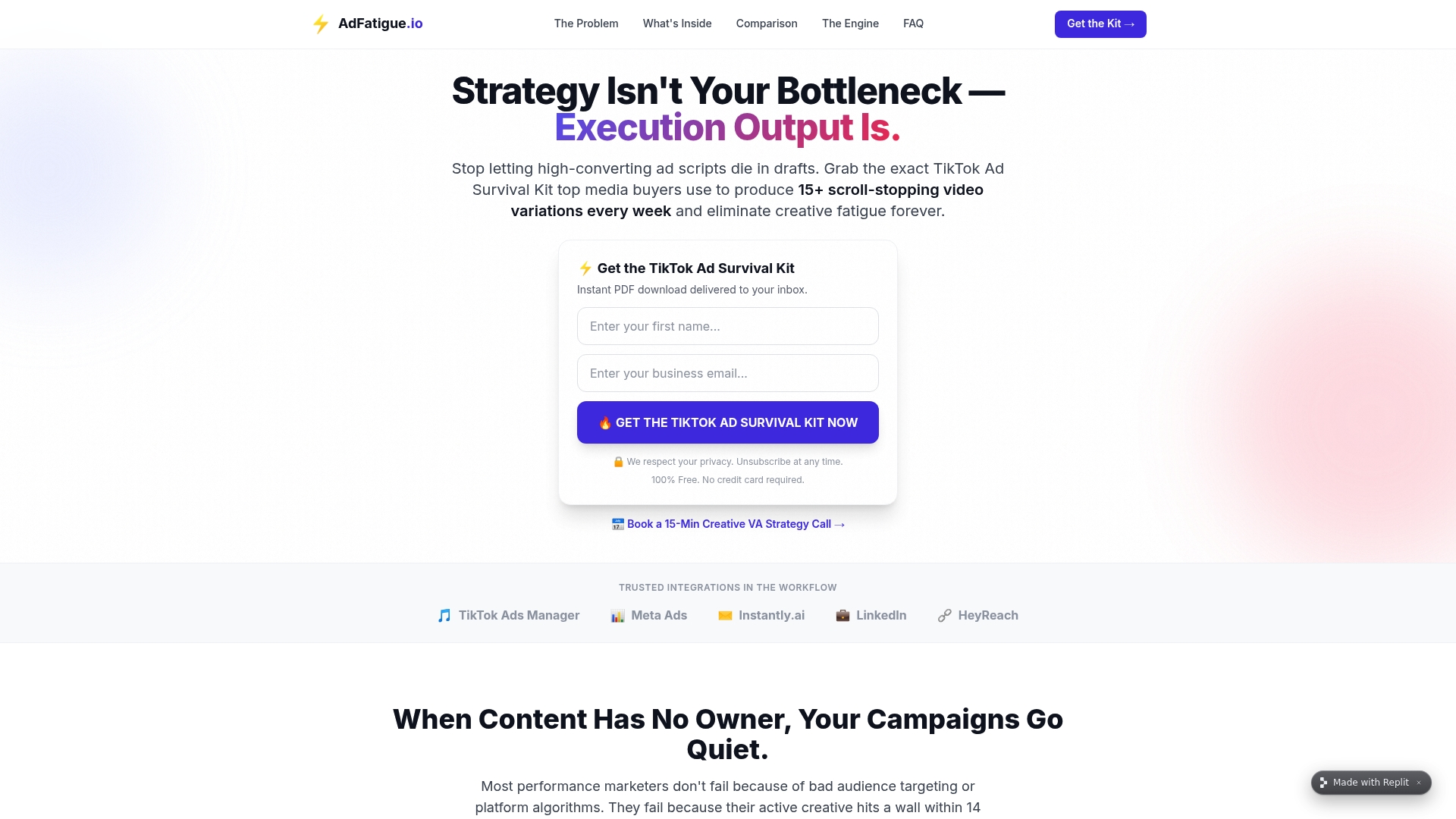
We turn a single raw video into multiple ad variations through dedicated virtual assistants, with turnaround typically running 24 to 48 hours instead of the days a traditional agency often takes. Clients using our service report a 31% reduction in cost per acquisition, which frees up time to focus on outreach and strategy instead of editing queues.
- Performance marketers running multiple active campaigns who need new hooks weekly.
- Small agencies managing creative for several clients without a dedicated editing team.
- Scaled outreach teams that want fresh ad variations to match a growing prospect pipeline.
| Who it fits | What you get |
|---|---|
| Performance marketers | Multiple ad variations per raw video, rapid turnaround |
| Small agencies | Managed creative output without hiring additional editors |
| Scaled outreach teams | Fresh hooks produced weekly to pair with growing outreach volume |
If your outreach is scaling faster than your creative team can keep up, compare our managed creative service against handling it in-house.
FAQ
How long should LinkedIn account warmup take?
Most accounts should plan for 2 to 4 weeks, choosing a faster 14-day preset for established accounts with no history of warnings, or a slower 30-day preset for new or previously restricted accounts. The right length depends more on account age and prior activity than on a fixed calendar rule.
How many connection requests per day is safe during warmup?
A common starting point is a low single-digit number of requests per day in the first week, such as 5 to 10 requests as outlined in practical outreach guides, increasing gradually over several weeks. Raise volume only after your acceptance rate has held steady for a few consecutive days.
Can automation tools handle LinkedIn account warmup for me?
Some outreach tools include a built-in warmup feature that queues a gradual ramp automatically and pauses if a campaign stops running, resuming later without resetting progress. This can simplify pacing, but the same monitoring habits, watching acceptance and reply rates, still apply whether you run warmup manually or through a tool.
What should I do if my LinkedIn account gets flagged during warmup?
Pause all outbound activity right away, confirm your account access is secure, and reply only to official emails from LinkedIn rather than links in unsolicited messages. Once any restriction clears, restart with a conservative 30-day preset rather than returning to your previous volume immediately.
Does warmup still matter after I return from a break?
Yes: a gap of a few weeks or more is worth treating like a fresh warmup, starting at a reduced volume and stepping back up over a week or two as your acceptance and reply rates hold steady. Vendor warmup features often resume prior progress automatically once a paused campaign restarts, but manual activity benefits from the same gradual restart.