

Facebook ad fatigue is creative-level burnout: the same visuals or hooks hitting the same eyes until attention decays and performance drops, regardless of audience size. The fix starts with a diagnosis, not a guess. Check frequency and CTR trends for the telltale pattern, then run a swap test by duplicating the ad, changing the hook, and launching it under a new ad ID. If fatigue is the real cause, performance typically recovers within 3 to 5 days.
TL;DR:
- Ad fatigue symptoms often appear when frequency exceeds 3.0 in prospecting or 3.5 in retargeting campaigns, and performance drops within days.
- A swap test changing the creative hook or opening can reveal if performance recovers within 3 to 5 days, confirming creative fatigue.
- Quickly rotating in new concepts and variants, with a production turnaround under 48 hours, prevents creative exhaustion from impacting results.
- Audience size and campaign objective influence fatigue thresholds, with narrower segments and remarketing hitting saturation faster than broad prospecting.
- Building a steady pipeline with consistent creative refreshes supported by automation reduces overall fatigue and enhances return on ad spend.
Table of Contents
- What Facebook Ad Fatigue Actually Means
- Diagnosing Facebook Ad Frequency Fatigue: Metrics, Thresholds, and the Swap Test
- Quick Fixes: What to Do Right Now to Stop the Bleed
- Building a Creative Pipeline That Prevents Fatigue Before It Starts
- When It Is Not Creative Fatigue
- How Wing Assistant Keeps Creative Pipelines Fed
- What Fatigue Costs You in ROAS, Not Just Impressions
- Fatigue Looks Different by Objective and Audience
- Segmenting Audiences So Fatigue Doesn't Spread
- A/B Testing and Rotation as Standing Practice
- Author Perspective: Stop Treating Creative as Precious
- Get Fresh Creative Out the Door Faster
- Sources
What Facebook Ad Fatigue Actually Means
Creative fatigue happens at the level of the asset, not the audience. Meta's own research frames it as the decline in performance that sets in once people see the same creative elements over and over, regardless of how big or fresh the targeted audience still is. You can have millions of untapped users left in an audience and still watch an ad die, because the algorithm keeps serving the same handful of top creatives to the same overlapping slice of people.
That distinction matters for diagnosis. Three related but different problems get lumped together constantly:
- Creative fatigue: the specific ad asset (a video, a static image, a headline) stops converting because the same people have seen it too many times.
- Ad fatigue: a broader decline across an ad set, often caused by creative fatigue but sometimes by budget, bidding, or delivery issues layered on top.
- Audience saturation: the pool of people left to reach has shrunk, usually in small or narrow retargeting segments, independent of what the creative looks like.
Meta's Analytics team models the decay mathematically, and the curve is steeper than most marketers assume. Click likelihood falls roughly along a pattern of (N+1) to the negative 0.4 power with each additional exposure, which works out to conversion likelihood dropping by about 45% by the fourth time someone sees the same ad. That is not a slow fade. It is a cliff that shows up fast once frequency creeps past a certain point, which is exactly why the diagnostic checks in the next section focus on catching it early rather than after CPA has already doubled.
Diagnosing Facebook Ad Frequency Fatigue: Metrics, Thresholds, and the Swap Test
Two categories of signals matter: leading indicators that warn you something is starting, and confirming indicators that tell you it has already happened. Treat frequency as your smoke detector and CTR decline as the fire itself.
For prospecting campaigns, an ad-level frequency around 2.5 is your early warning. Retargeting campaigns tolerate slightly higher exposure before trouble starts, but once frequency hits 3.0 to 3.5, practitioner benchmarks call it a danger zone that needs a creative refresh now, not next week.
Confirming indicators require patience for real data, not a knee-jerk pause after one bad day.
| Signal | Threshold to watch | What it suggests |
|---|---|---|
| CTR trend | Down 10 to 20% week over week | Creative-level decay setting in |
| CPM | Rising while frequency climbs | Delivery cost inflating on the same audience |
| Cost per result | Climbing 2 weeks running | Fatigue compounding, not a one-off blip |
| First-time impression ratio | Falling toward the ad set's saturation point | Fewer new eyes seeing the ad |
The rule that separates real diagnosis from panic: require at least two of these signals sustained for seven days before concluding fatigue, then confirm with a swap test rather than acting on the metrics alone.
The swap test itself is simple. Duplicate the flagged ad, change the hook or the first three seconds of the video, and launch it on the identical audience under a brand-new ad ID (never edit the existing ad, which resets learning without proving anything). Meta's own experiments back this up: injecting new creative into fatigued ad sets produced a dose-dependent lift, averaging around 8% higher conversion rates in the highest-fatigue cases. If the new version recovers within 3 to 5 days, you had creative fatigue. If it does not budge, the problem lives somewhere else, likely the audience or the landing page.
Quick Fixes: What to Do Right Now to Stop the Bleed
Once you have confirmed fatigue, the order of operations matters. Fixing the wrong thing first wastes budget and resets learning phases you didn't need to touch.
- Pause or throttle the flagged creative immediately. If frequency has crossed 3.0 and CTR is sliding, cut spend on that specific ad before it drags down the whole ad set's average cost per result.
- Duplicate and swap the hook within the hour. This is the fastest lever you have. Changing the first three seconds of a video or the headline on a static image, then launching under a new ad ID, often recovers performance without a full production cycle.
- Rotate in 3 to 5 backup variants within days, not weeks. A single replacement ad is a patch. A small rotating bench of variants keeps frequency spread across multiple assets instead of concentrating exposure on one.
- Broaden prospecting audiences if frequency is climbing despite stable spend. Sometimes the algorithm is recycling the same faces because the audience is narrower than the budget requires.
- Match budget to audience size. An ad set spending aggressively against a small custom audience will hit fatigue thresholds in days, not weeks.
- Adjust placements and aspect ratios. A creative fatigued in Feed can still perform in Reels or Stories if you reformat it rather than retire it outright.
- Within 1 to 3 weeks, build genuinely new concepts, not palette swaps. Meaningful variation, a new angle, a different visual treatment, a different value proposition, restores responsiveness far more reliably than minor cosmetic tweaks.
For video specifically, the first three seconds carry disproportionate weight; test a new pattern-interrupt opener before touching anything else. For static ads, a new hero image paired with a rewritten headline usually outperforms just recoloring the same graphic.
Pro Tip: Don't edit the fatigued ad in place. Editing resets Meta's learning phase and muddies your data, so you can't tell whether performance changed because of the new creative or because the algorithm restarted from zero. Always launch replacements under new ad IDs.
Know when to stop rotating and start rebuilding. If your third rotation in a row fatigues within a week, the problem usually isn't the creative, it's the audience being too small for the spend level.
Building a Creative Pipeline That Prevents Fatigue Before It Starts
Reactive fixes only get you so far. Teams that stop firefighting build a cadence tied directly to spend, so fresh creative arrives before the old stuff dies.
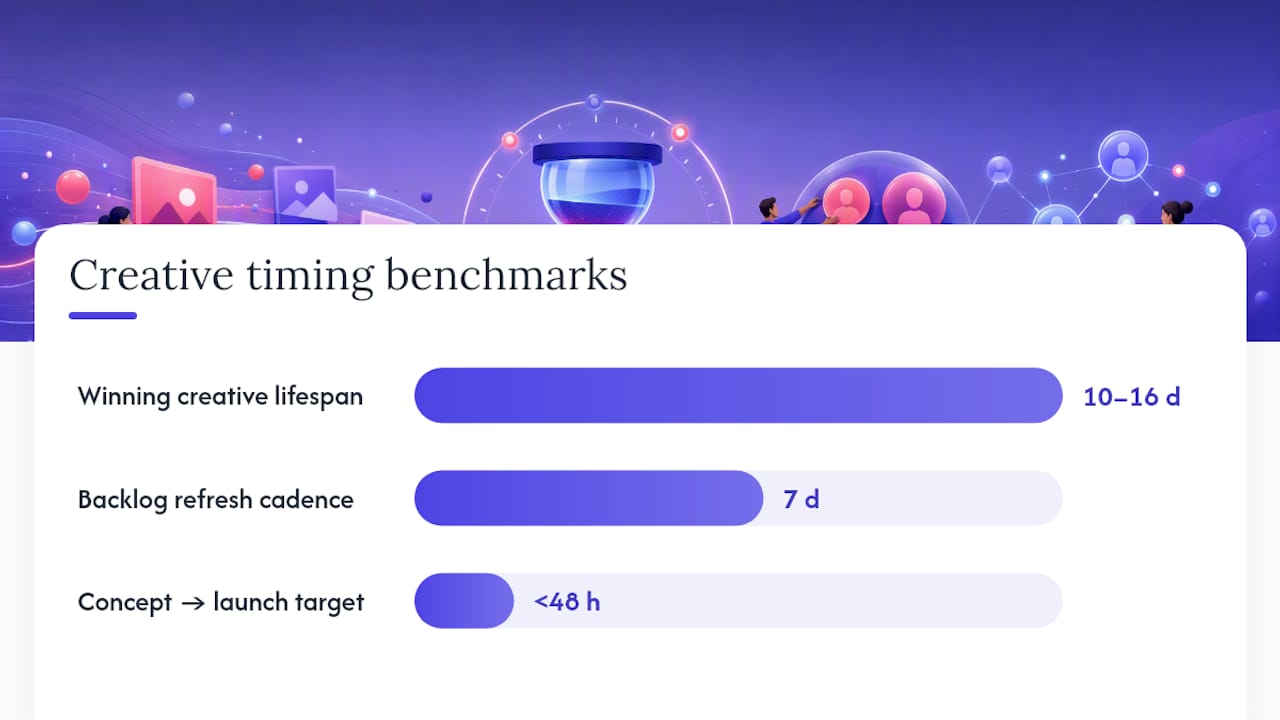
A workable rule of thumb: budget for one new creative concept for every $2,000 to $3,000 in monthly ad spend. At scale, expect even winning creatives to have a shelf life of roughly 10 to 16 days before performance starts sliding, which means your production pipeline has to move faster than your best ad's expiration date.
A functional pipeline runs through five stages:
- Concept backlog: a running list of angles, hooks, and offers waiting to be produced, refreshed weekly.
- Production: raw footage or design assets turned into finished ads, handled internally or by a dedicated virtual assistant team.
- Variant packs: each concept gets produced in 3 to 5 format variations (different hooks, aspect ratios, or CTAs).
- Test matrix: variants launch under fresh ad IDs against a control, isolating what actually moves the needle.
- Rotate or retire: winners get scaled, losers get pulled, and the backlog refills.
Reserve 10 to 20% of total creative spend specifically for testing and replacement, treated as a fixed line item, not an afterthought when budgets get tight. This is also where automation and managed VA production earn their keep. Compressing the concept-to-launch timeline from weeks to under 48 hours lets you match the 10 to 16 day creative lifespan instead of chasing it.
Monitoring cadence should mirror the pipeline: check frequency and CTR daily, review cohort-level performance weekly, and audit the health of the entire pipeline (backlog depth, production turnaround, test velocity) monthly.
When It Is Not Creative Fatigue
Not every performance dip traces back to tired creative, and misdiagnosing the cause wastes a production cycle chasing the wrong fix.
A few patterns point elsewhere. Steady CTR paired with rising CPA usually means a landing page problem, not a creative one, since people are still clicking but not converting once they arrive. Sudden account-wide cost spikes across every ad set, even ones running fresh creative, point to auction-level CPM inflation, often seasonal or competitive, rather than anything wrong with your assets. And a recent account structure change (new pixel event, updated attribution window, budget shift) can mimic fatigue symptoms without any creative involved at all.
Three lightweight tests isolate the real cause quickly:
- Run a landing-page A/B test with the same ad driving traffic to two page versions.
- Verify your pixel and conversion data with a server-side check; a tool like TrackAff catches tracking discrepancies that masquerade as performance decline.
- Launch one unchanged control ad and watch whether it also declines, which tells you if the issue is account-wide rather than creative-specific.
Search Engine Land's analysis of delivery-level demotion is worth a look here too: sometimes impressions and spend drop even though the budget didn't change, a sign the algorithm itself deprioritized the ad rather than the audience simply tiring of it.
How Wing Assistant Keeps Creative Pipelines Fed
The prevention workflow above only works if production can actually keep pace, and that's the bottleneck for most teams. Wing Assistant assigns dedicated virtual assistants who take a single piece of raw video and turn it into a full slate of ad variations, hooks, cuts, and formats, without a marketer touching an editing timeline.
- Turnaround runs 24 to 48 hours, well inside the 10 to 16 day creative lifespan that top performers are already fighting against.
- Output volume beats what most agencies deliver in the same window, at a fraction of typical agency day rates.
- Brands using Wing Assistant report a 31% reduction in cost per acquisition, a direct result of never letting the ad account run dry on fresh variants.
Slotting Wing Assistant into the pipeline described earlier is straightforward: it becomes the production stage, feeding the variant-pack and test-matrix steps on a cadence that matches your spend rather than your internal team's bandwidth.
What Fatigue Costs You in ROAS, Not Just Impressions
The real damage from ad fatigue isn't the metric dashboard, it's the compounding cost. As CTR erodes and CPM climbs simultaneously, cost per result doesn't rise gently, it accelerates, because you're paying more for delivery while converting a shrinking share of the people who see the ad.
That compounding effect hits ROAS harder than most marketers expect. Budget that would have funded new creative instead gets burned maintaining a dying ad set, which is the actual opportunity cost of ignoring the early warning signals covered earlier.
There's also a account-level ripple effect worth flagging: fatigued ads that keep spending pull budget away from ad sets that are still performing well, since Meta's delivery system reallocates spend based on relative efficiency signals across the account. One tired creative rarely stays contained to its own line item.
Fatigue Looks Different by Objective and Audience
Fatigue doesn't hit every campaign the same way. Awareness and top-of-funnel prospecting campaigns tolerate higher frequency before performance drops, simply because the goal is exposure rather than repeated conversion from the same person. Conversion and retargeting campaigns fatigue faster at lower frequency, since you're asking the same narrow group of people to act again and again.
Audience size changes the math too. A broad prospecting audience of several million people can absorb a lot of spend before frequency climbs high enough to matter. A retargeting segment of a few thousand website visitors hits saturation and fatigue almost simultaneously, which is why retargeting ad sets typically need creative refreshes far more often than cold-audience campaigns.
Platform context matters as well. Younger, Gen Z heavy platforms like TikTok and Snapchat tend to demand faster creative turnover than Meta's broader demographic mix, which is one reason a strategy built for TikTok ad fatigue or TikTok creative fatigue often needs a faster refresh cadence than the same brand's Meta campaigns. LinkedIn ad fatigue follows yet another rhythm, since B2B audiences are smaller and slower moving, so the same ad can run productively for longer before frequency becomes a problem.
Segmenting Audiences So Fatigue Doesn't Spread
Smart segmentation limits how much of your account a single fatigued creative can damage. Splitting a large retargeting pool into smaller lifecycle stages (recent visitors, cart abandoners, past purchasers) lets you run distinct creative for each, rather than exhausting one ad against everyone simultaneously.
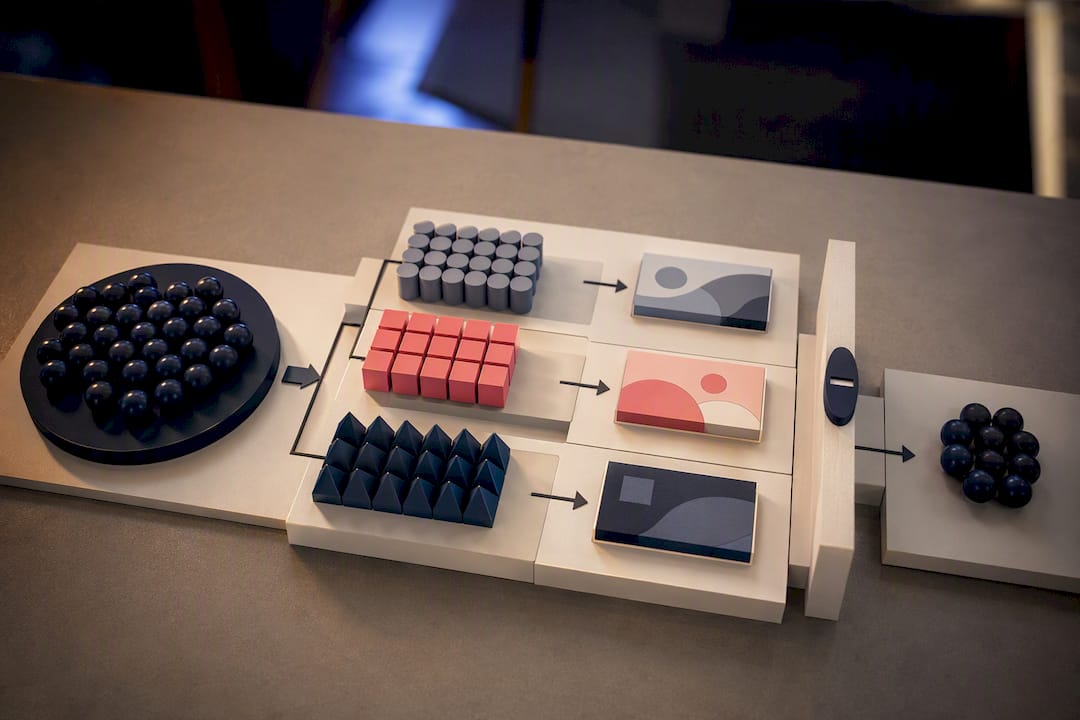
When one lookalike tier shows early frequency warnings, you can shift budget toward a fresher tier without touching the whole campaign.
The overlooked practice here is exclusion hygiene. Excluding people who already converted, or who've already seen a specific creative a set number of times, from ongoing prospecting keeps optimal frequency for Facebook ads in check automatically instead of relying on manual monitoring alone. Combined with the concept backlog described earlier, tight segmentation turns fatigue from an account-wide event into a contained, one-segment problem you can fix without disrupting everything else.
A/B Testing and Rotation as Standing Practice
Rotation only works as prevention if it's continuous, not something you reach for after CTR already cratered. Running a standing A/B test between your current best performer and a challenger variant, at all times, means you always have a validated backup ready the moment frequency crosses your warning threshold.
The mistake most accounts make is testing one variable at a time so slowly that by the time results come in, the winning ad has already started fatiguing. Faster iteration matters more than perfectly clean test design. Test hooks against each other in one round, then test visual treatments in the next, rather than trying to isolate every variable simultaneously across a single sprawling matrix.
Rotation cadence should track the 10 to 16 day creative lifespan mentioned earlier rather than a fixed calendar schedule. Some ad sets need a new variant every five days; others, particularly in smaller B2B or LinkedIn audiences, can run the same winner for a month. Let the frequency and CTR data set the schedule, not a generic content calendar.
Author Perspective: Stop Treating Creative as Precious
Most teams still budget creative like a capital expense: shoot it once, protect it, milk it as long as possible. That mindset guarantees fatigue. The fix is treating creative production like inventory that needs constant restocking, and measuring contribution margin alongside ROAS so a fatiguing ad gets replaced before it quietly erodes profit. Shift internal KPIs toward variant throughput and test velocity, not just how long one ad "won." Speed beats precious.
— James
Get Fresh Creative Out the Door Faster
Every fix in this guide works only if new creative can actually reach the ad account before the old version dies. That's the gap Wing Assistant closes. Instead of waiting on an agency for two weeks to get three static ads back, you send one raw video clip and get a full slate of variants, new hooks, new cuts, new formats, back in 24 to 48 hours.
That turnaround is what lets a testing budget actually keep pace with a 10 to 16 day creative lifespan instead of chasing it after the fact. If your ad account is bleeding spend on fatigued creative right now, see how the Wing Assistant workflow rebuilds your creative pipeline and get a feel for the hook cadence teams are running to stay ahead of frequency creep.
Sources
Meta's Analytics at Meta research documents the swap-test lift; Search Engine Land explains the exposure decay curve; Datadrew sets practitioner thresholds; Forbes covers shrinking creative lifespans; AppsFlyer details meaningful variation over cosmetic tweaks.
- Creative fatigue: how advertisers can improve performance by managing repeated exposures (Analytics at Meta / Medium)
- Ad Creative Fatigue: Signals, Thresholds & Cost | Datadrew
- Dying ads: creative fatigue and repeated exposures (Search Engine Land)
- How do you beat ad fatigue when your best creative dies in a week? (Forbes)
- Creative fatigue: symptoms and fixes (AppsFlyer blog)